Two Paths Through One Living Classroom:
Girls Who Hike Virginia at SERC
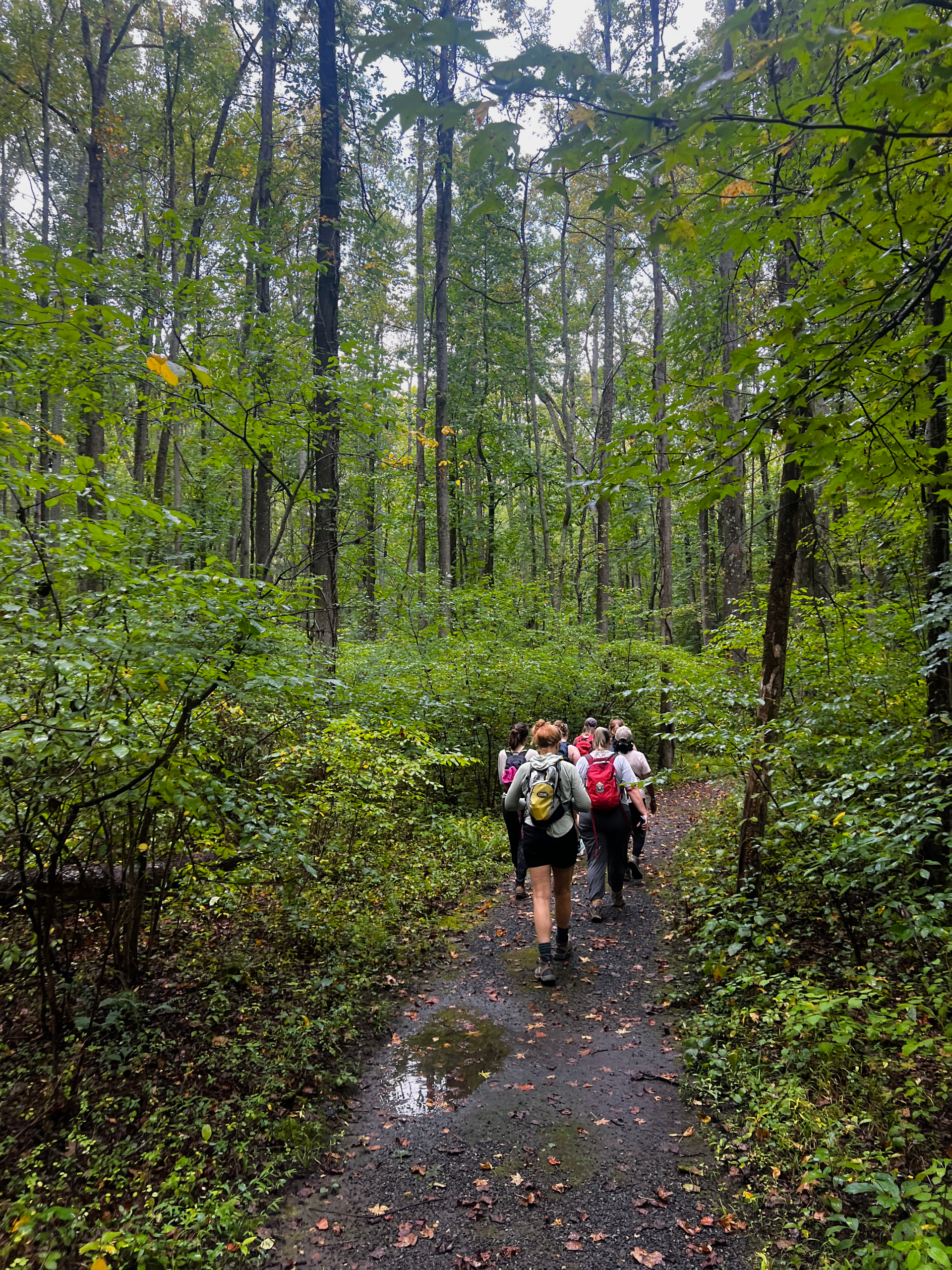
There are places where science, history, and the tides all speak at once. The Smithsonian Environmental Research Center (SERC) in Edgewater, Maryland, is one of them—2,600+ acres of forests, marshes, and shoreline on the Rhode River where the past sits in the same breeze as saltwater cordgrass. I recently led two Girls Who Hike Virginia outings there. They were very different—one began at the Reed Education Center with a shoreline walk, the other at the Charles Mathias Laboratory—but together they created a full, immersive portrait of this landscape and the people who’ve shaped it.
Walking the Water’s Edge
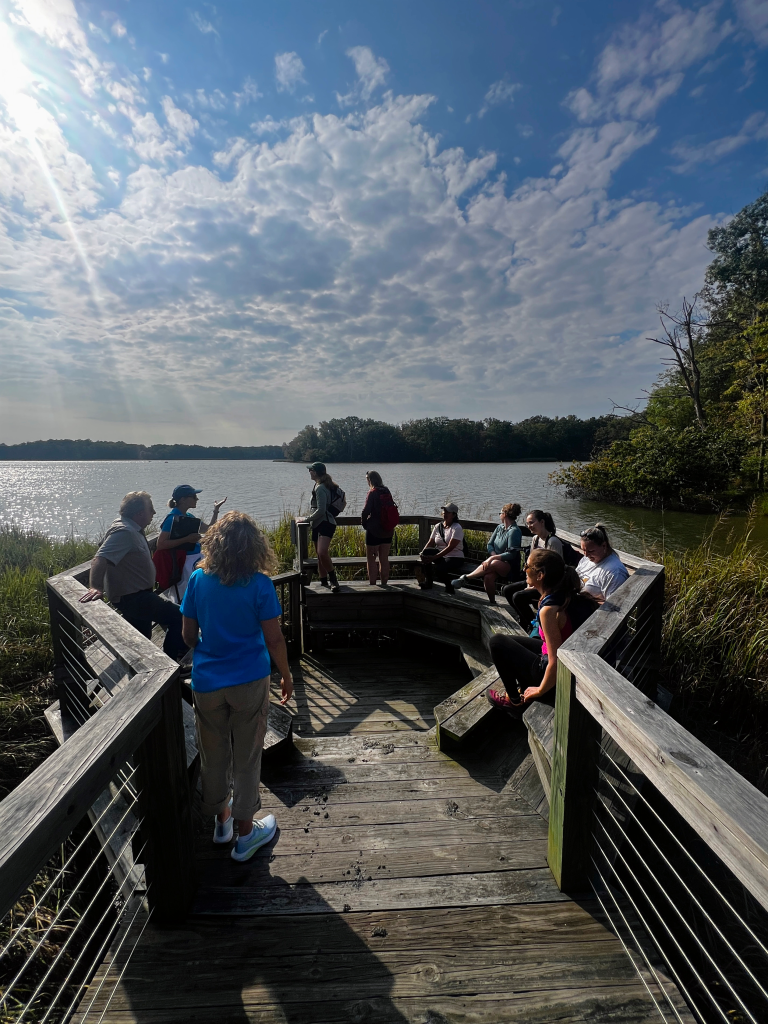
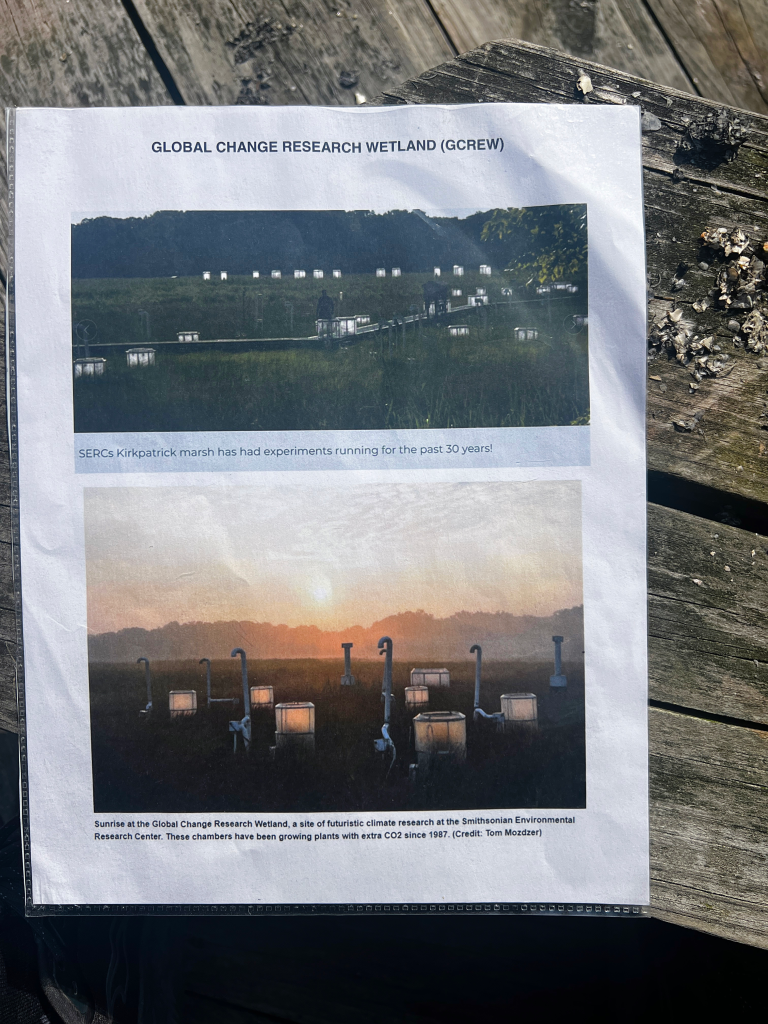
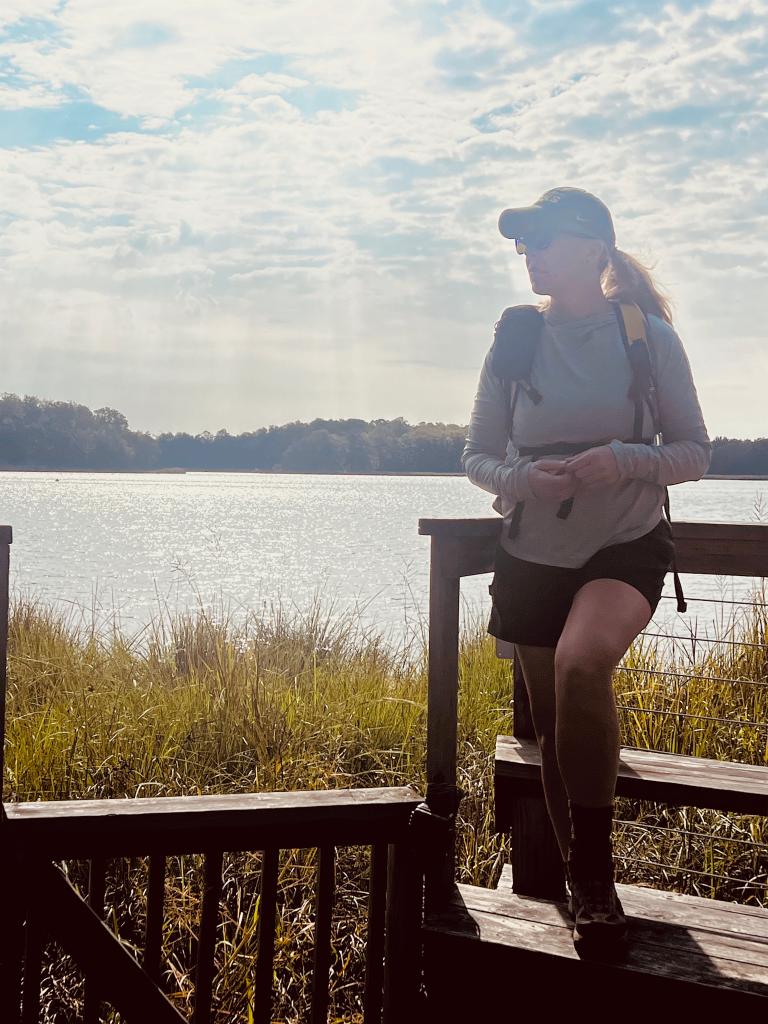
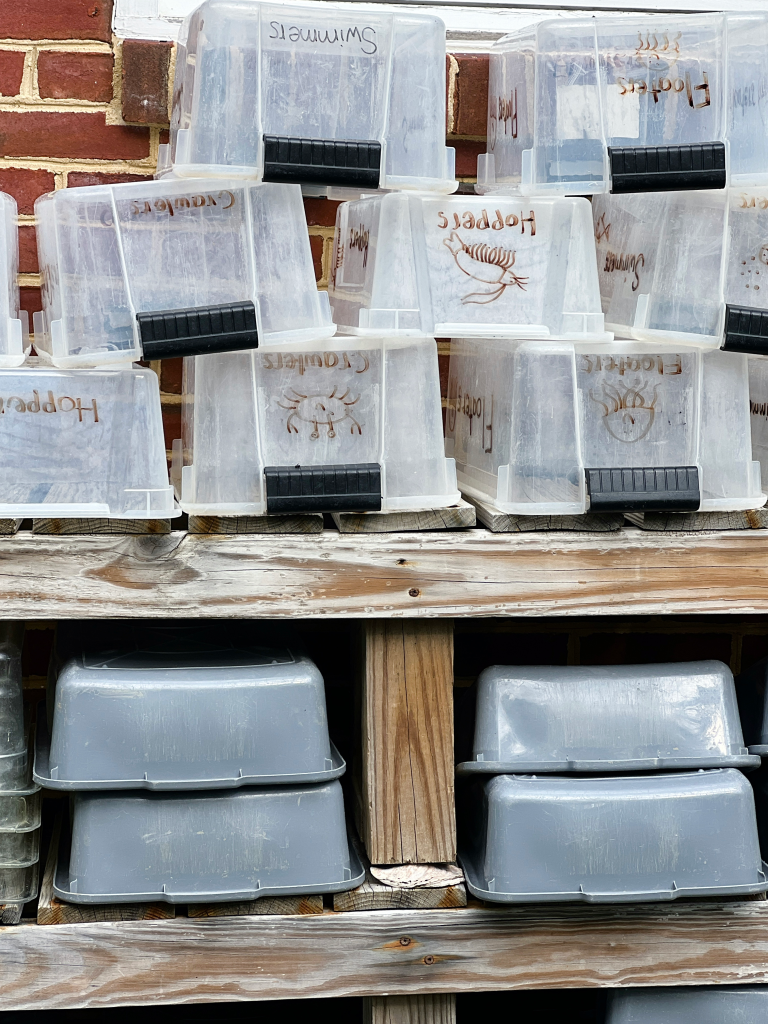
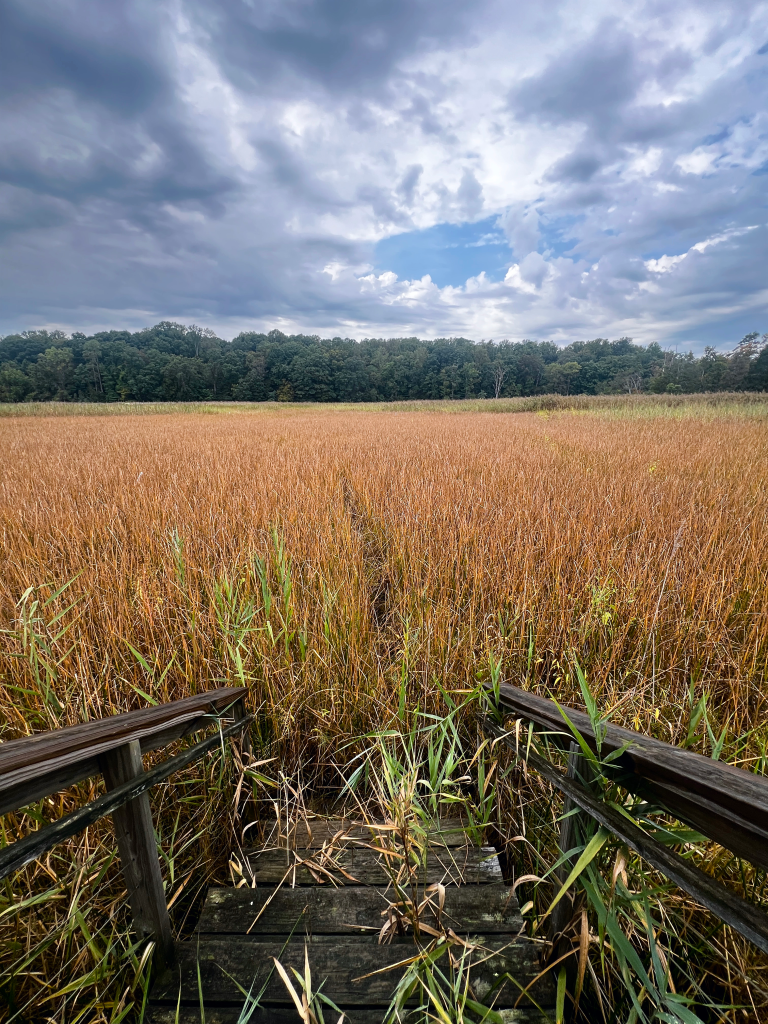
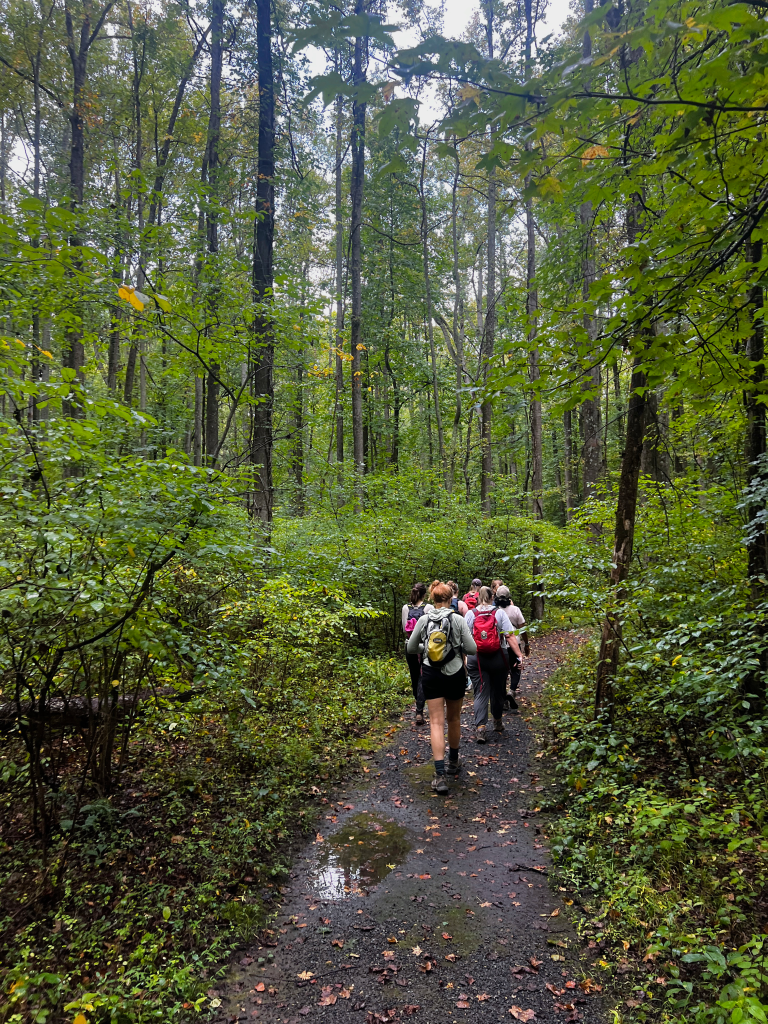
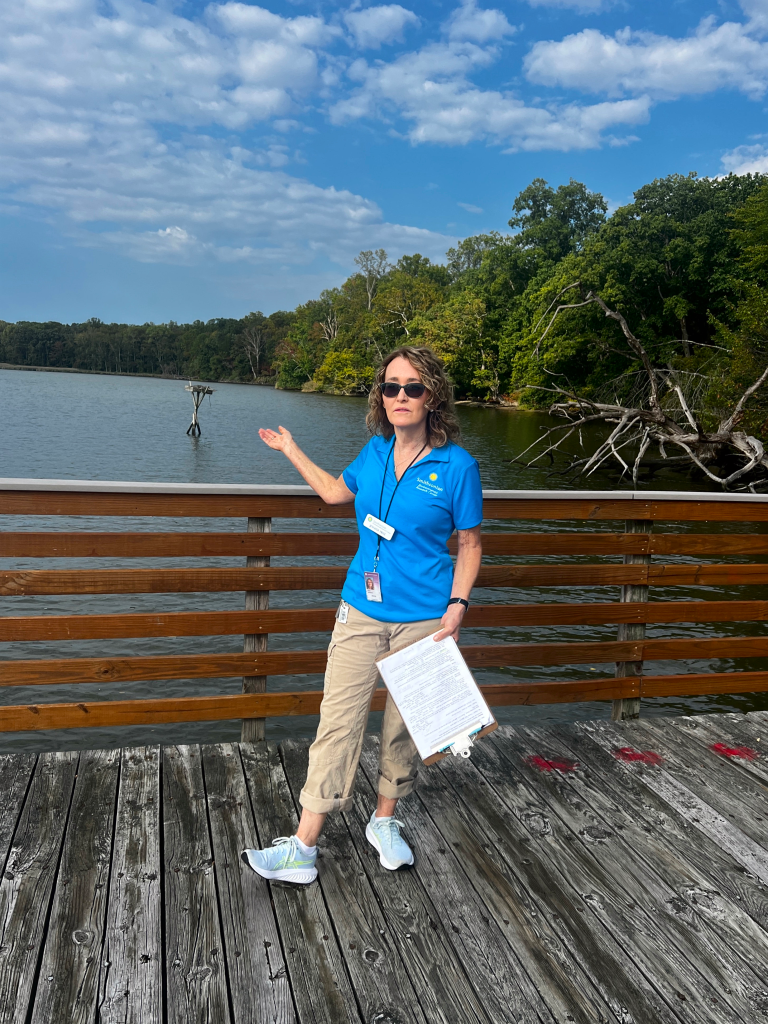
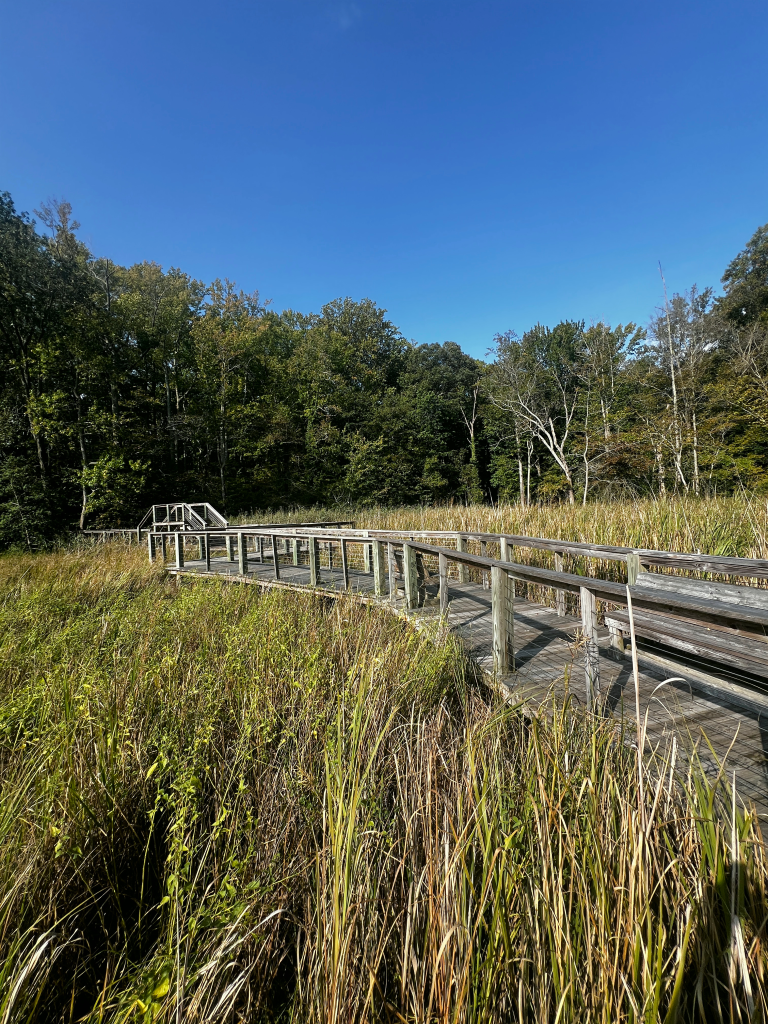
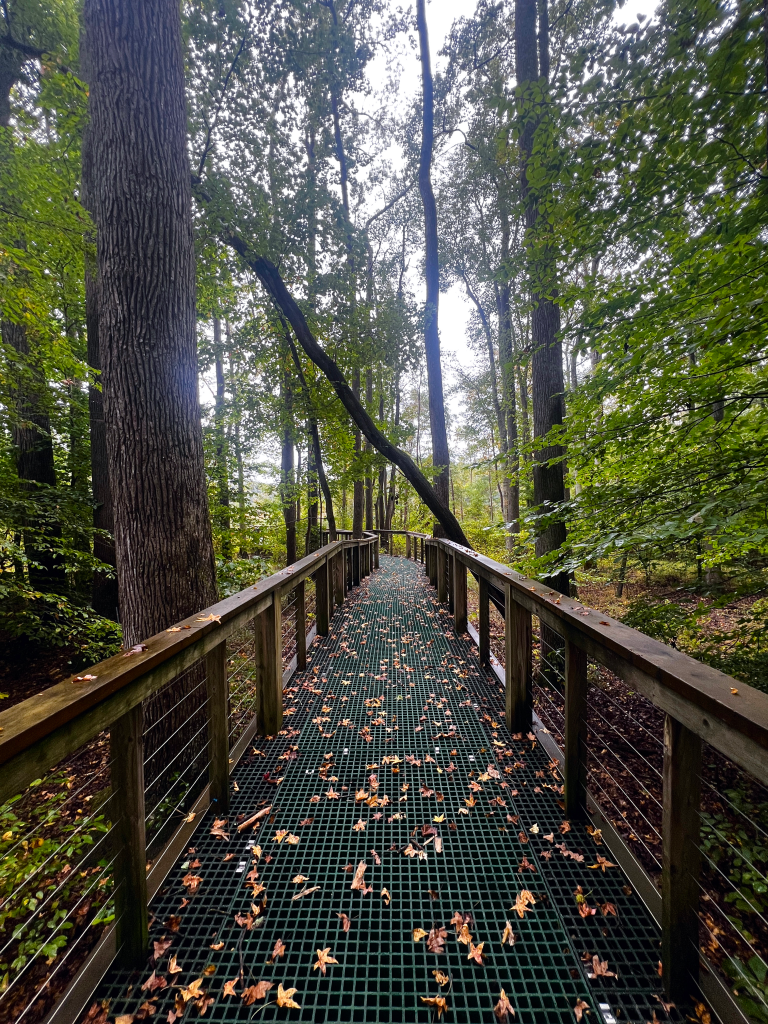
Our first group met at the Education Center and stepped straight into the estuary’s rhythms. We traced the shore with SERC guides, talking nursery habitat for blue crabs, submerged aquatic vegetation, and how upland decisions show up downstream. It’s a perfect “systems” walk: every osprey cry and every blade of spartina becomes a clue to how coastal ecosystems hold together—and how easily they come undone.
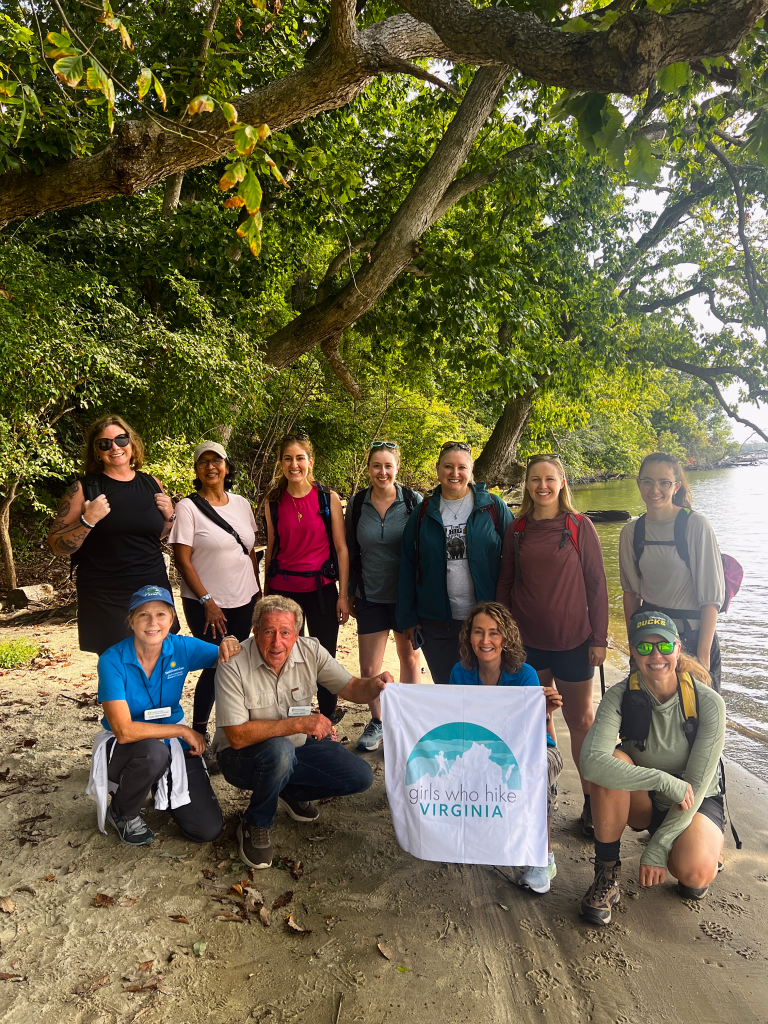
Our tour was guided by two passionate educators— dedicating their time to giving back to the world they love. You could feel their pride in the way they spoke about the marshes, forests, and estuary life as if they were sharing stories of old friends. Their commitment to environmental stewardship isn’t just about teaching facts; it’s about passing on a legacy of gratitude and care. They lit up when they learned about Girls Who Hike Virginia and our mission of community and conservation, recognizing in us a shared sense of purpose.
Inside the Lab
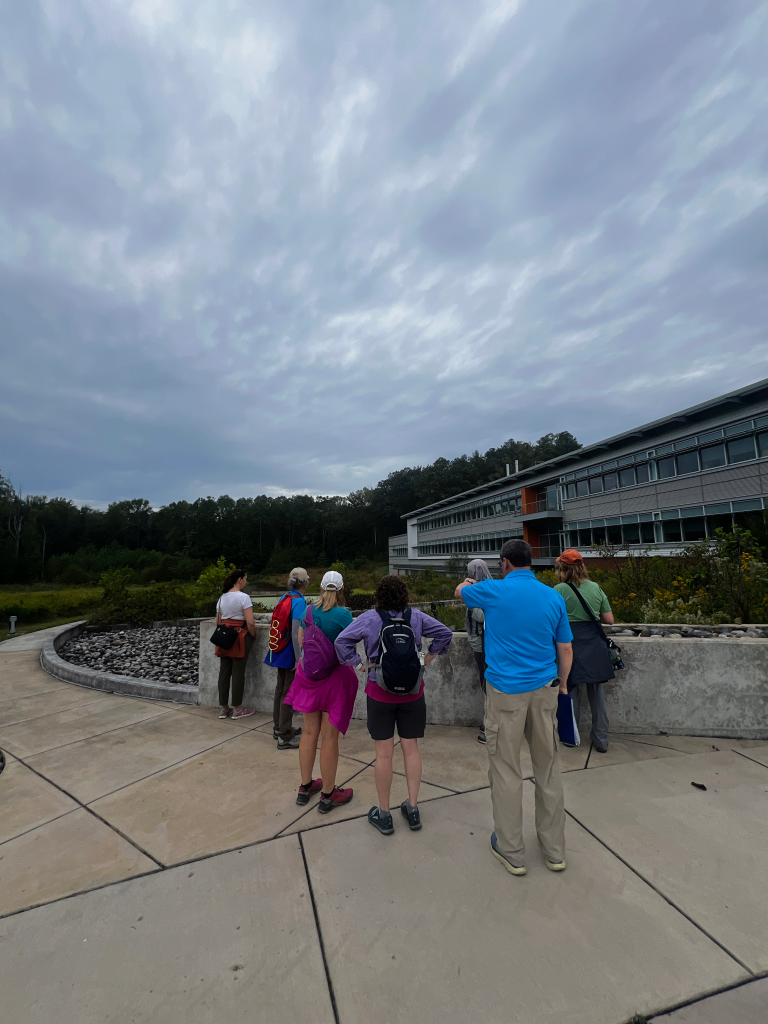
The second experience began at the Mathias Lab—SERC’s LEED-Platinum centerpiece where engineers and ecologists have literally built conservation into the walls. Solar generation, geothermal heating and cooling, reclaimed water, and stormwater wetlands make the building itself a teaching tool before you see a single microscope. From there, you glimpse how long-term data and experimental plots turn into real-world policy and restoration wins.
Woodlawn House: A Doorway Into Many Histories
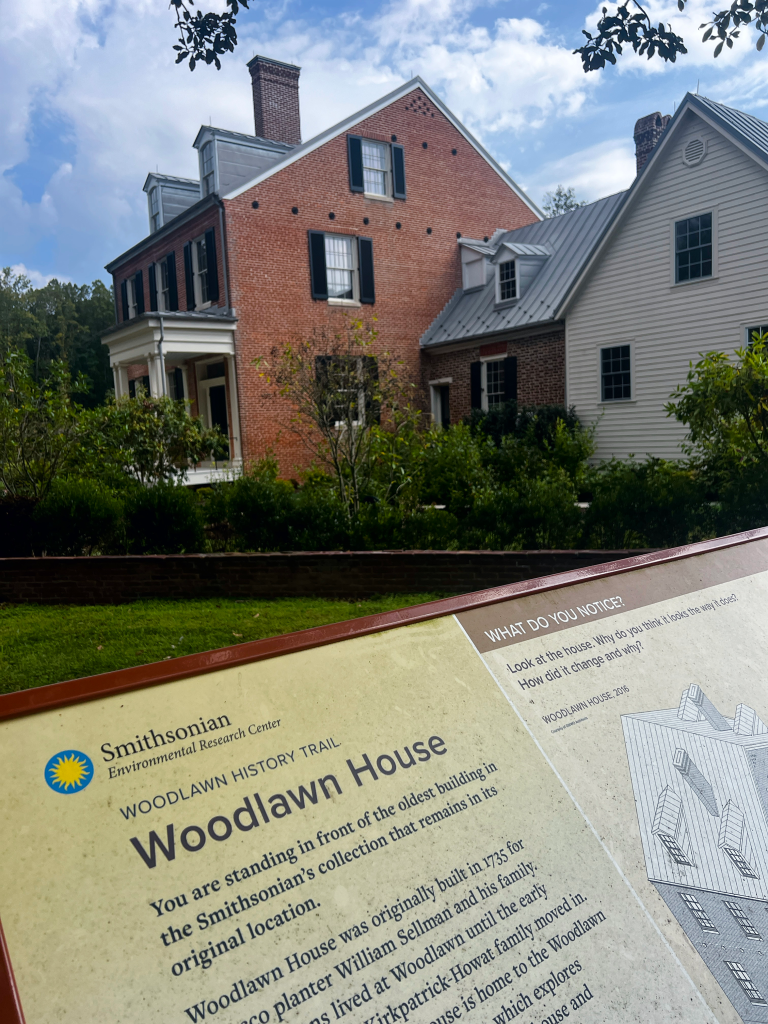
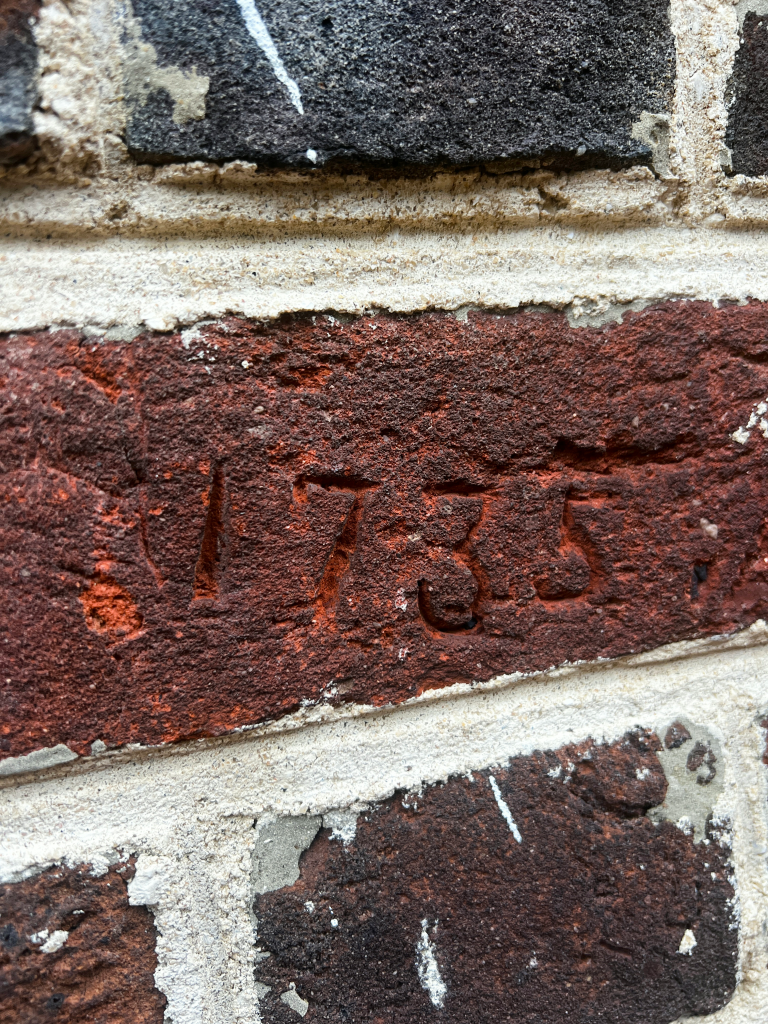
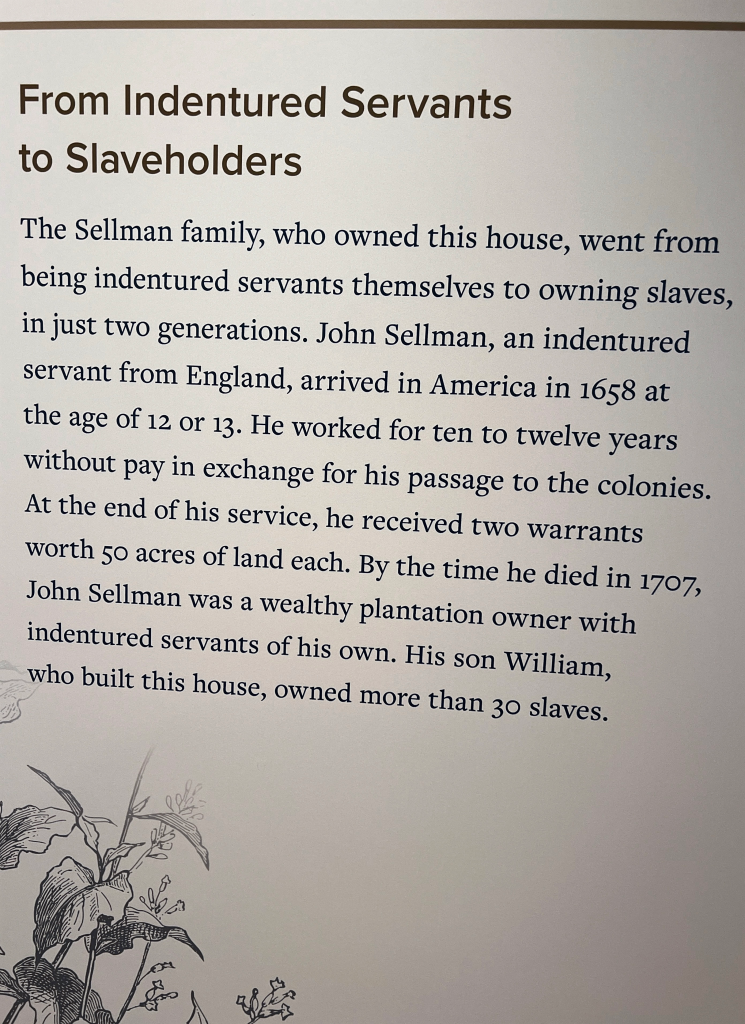
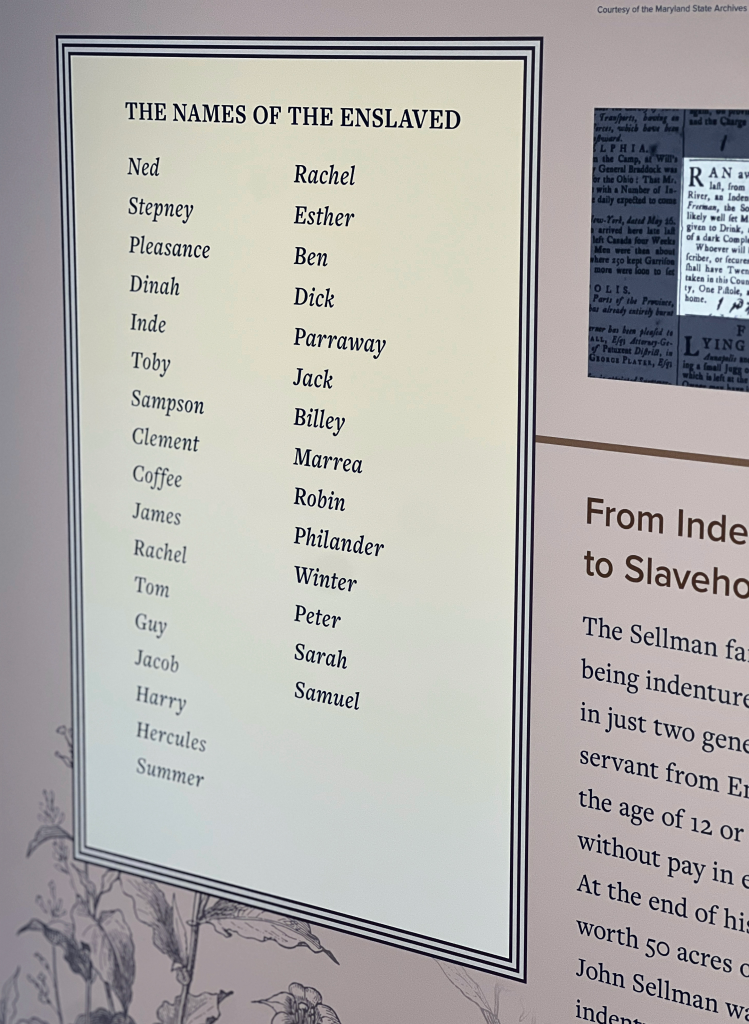
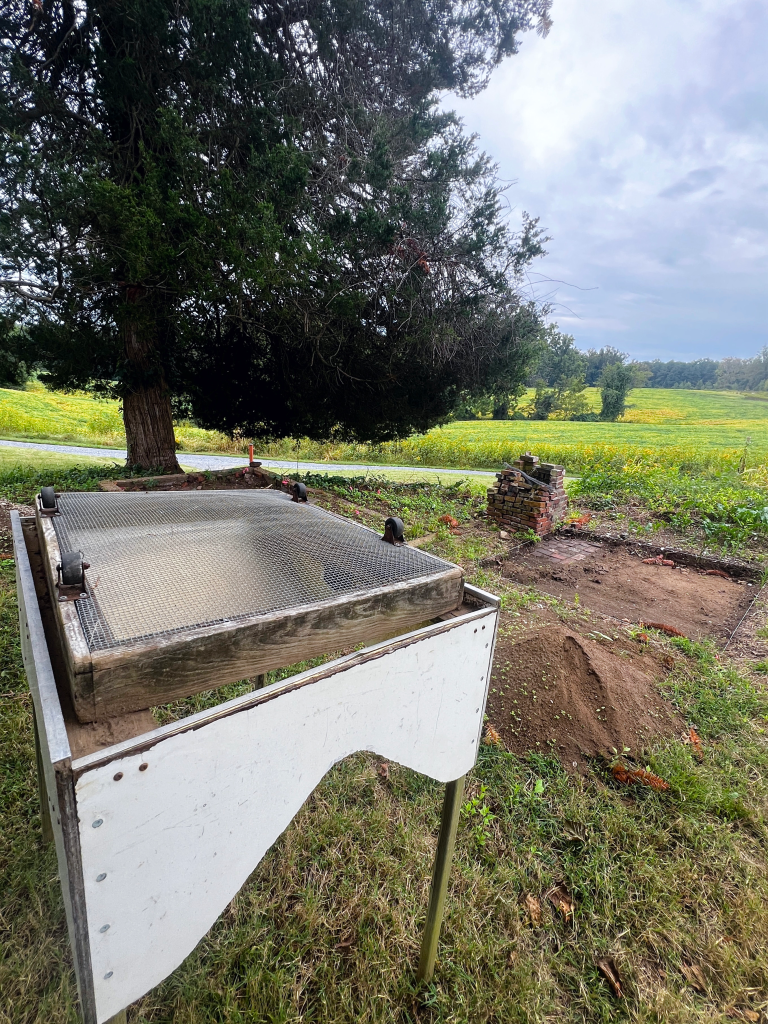
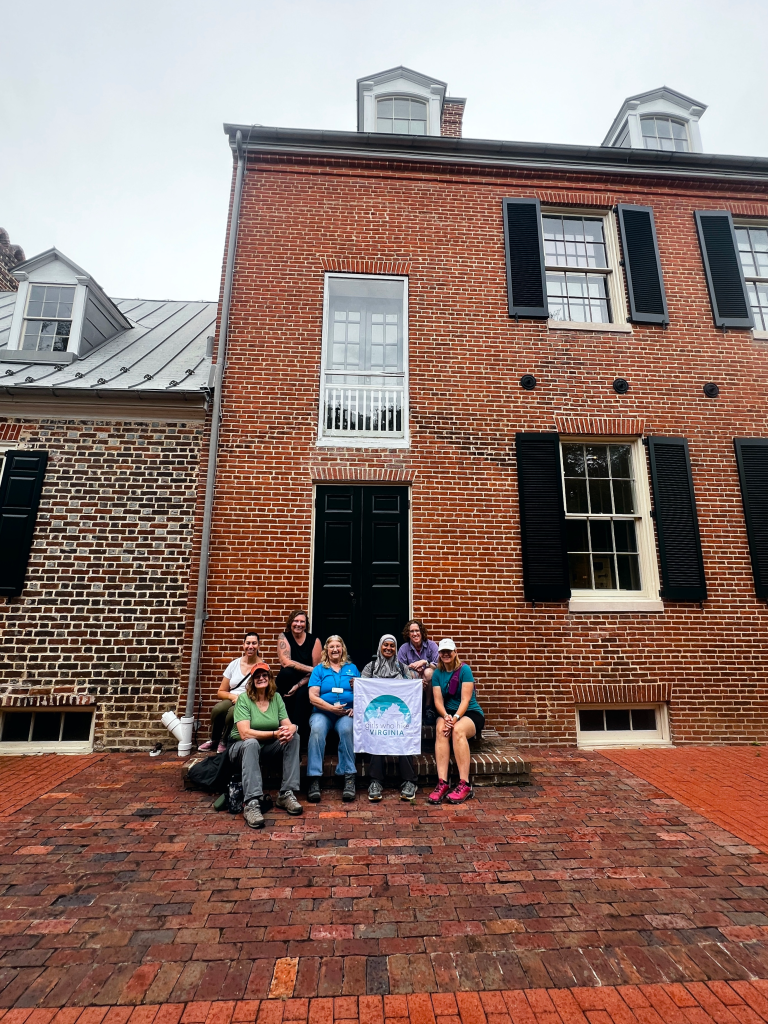
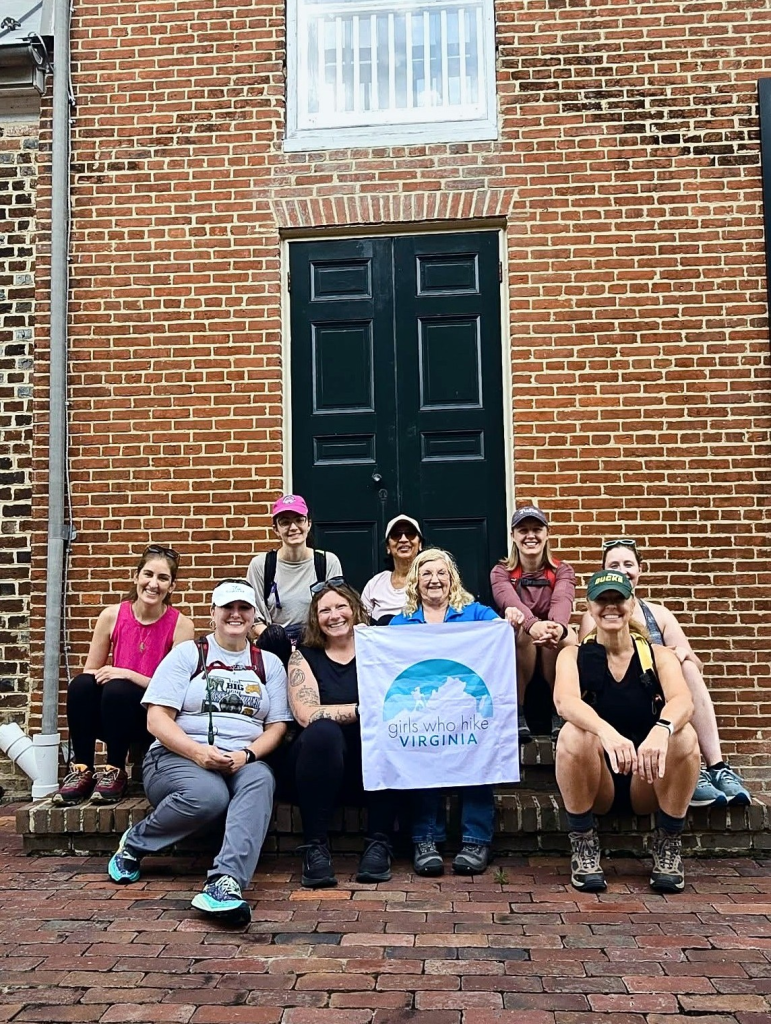
Both outings ended at Woodlawn House, now SERC’s public history center—and the oldest Smithsonian building still on its original site. Built in 1735 for tobacco planter William Sellman, Woodlawn was home to generations of Sellmans and, later, the Kirkpatrick-Howat family. But its true story is broader: enslaved African Americans, servants, tenant farmers, and free Black families lived and labored on this land, their daily lives now emerging through archaeology and community research.
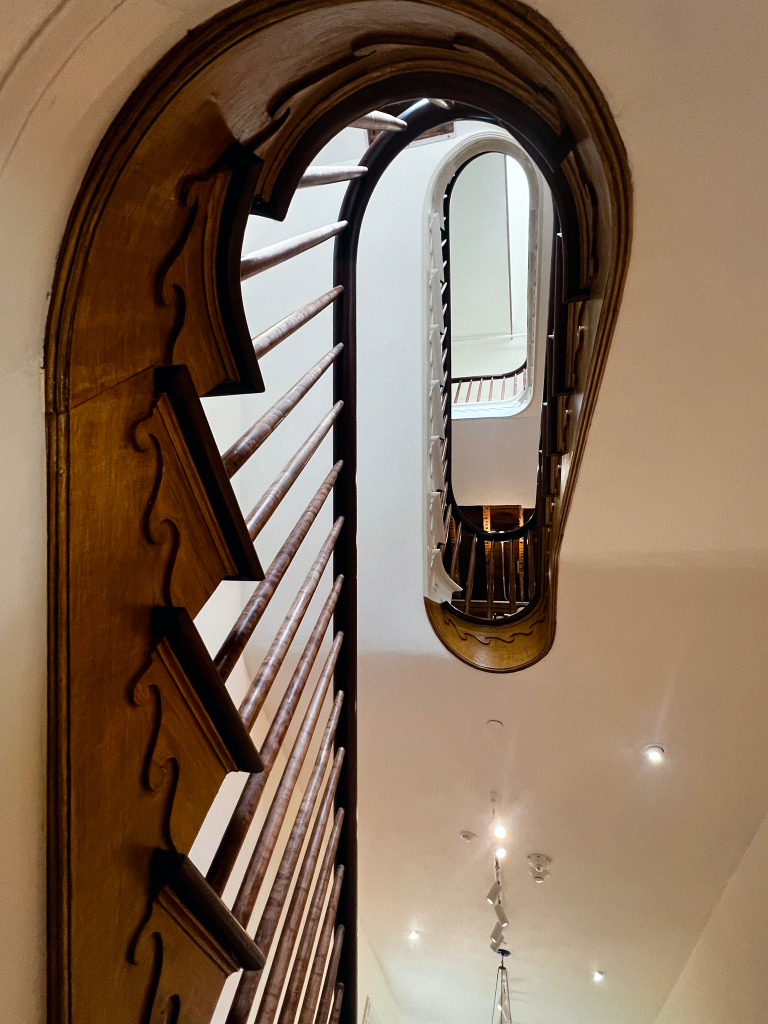
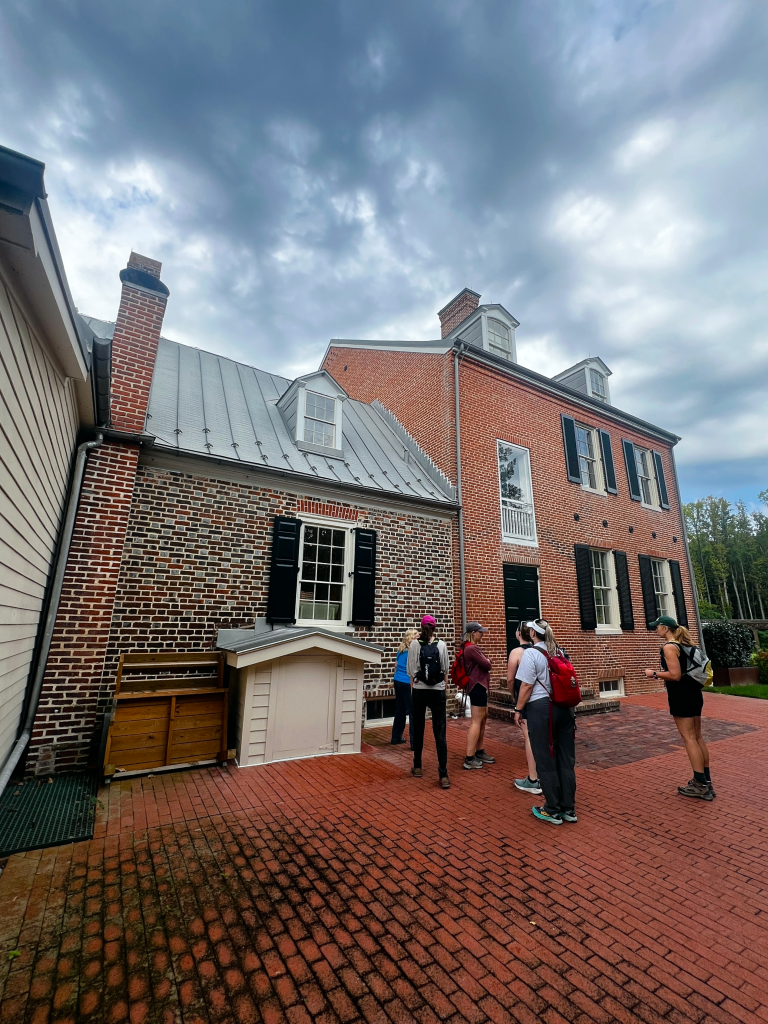
Inside, the exhibits move from land acknowledgments and First Peoples to artifact cases filled with everyday objects unearthed by volunteer researchers—buttons, ceramics, tools—material traces that pull names and labor back into view.
Ancestral Homelands
SERC’s own interpretation begins by honoring the Native peoples whose homelands include this shoreline. In the Chesapeake, that most often means the Piscataway, among others, who stewarded these waters long before colonization. Today, Piscataway communities are recognized by the State of Maryland; acknowledging their past and present ties is part of how SERC frames every visit.
From Java Farm to SERC
SERC began with a gift: in 1962, Robert Lee Forrest bequeathed his 368-acre Java Farm and funds to the Smithsonian. By 1965, the “Chesapeake Bay Center for Field Biology” opened; in 1970 it became the Chesapeake Bay Center for Environmental Studies; and in 1983 it took the name we know today, the Smithsonian Environmental Research Center. Over time, the campus expanded—most notably with the 2008 purchase of adjacent Contee Farm, reunifying lands that had been divided for 150 years.
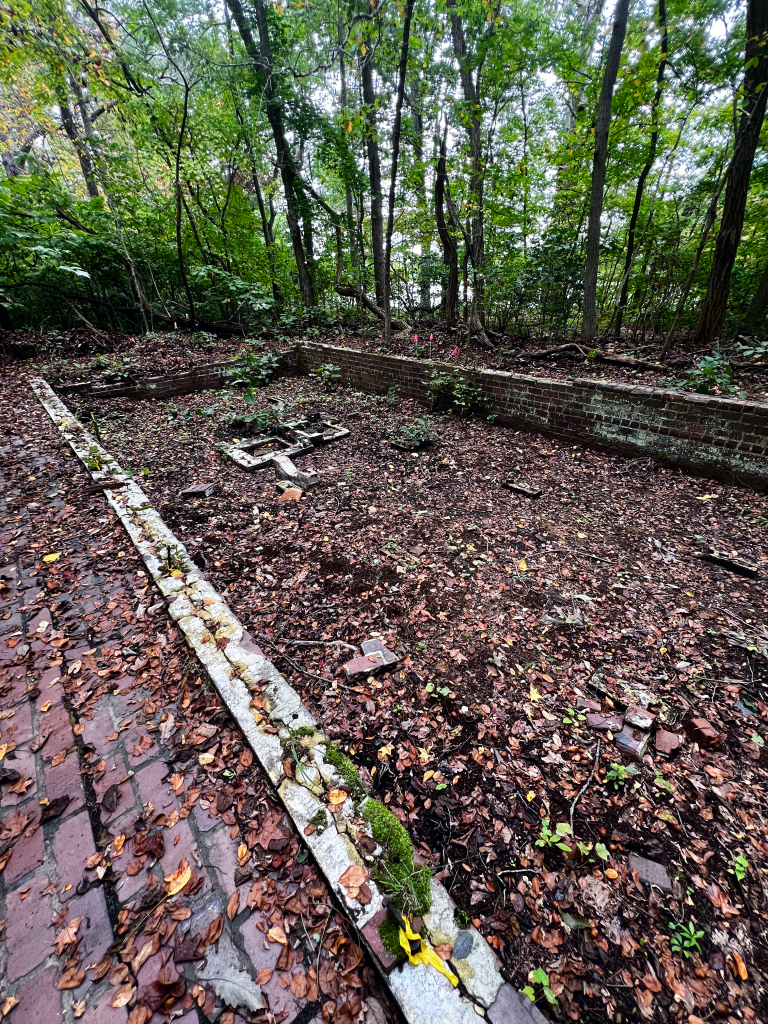
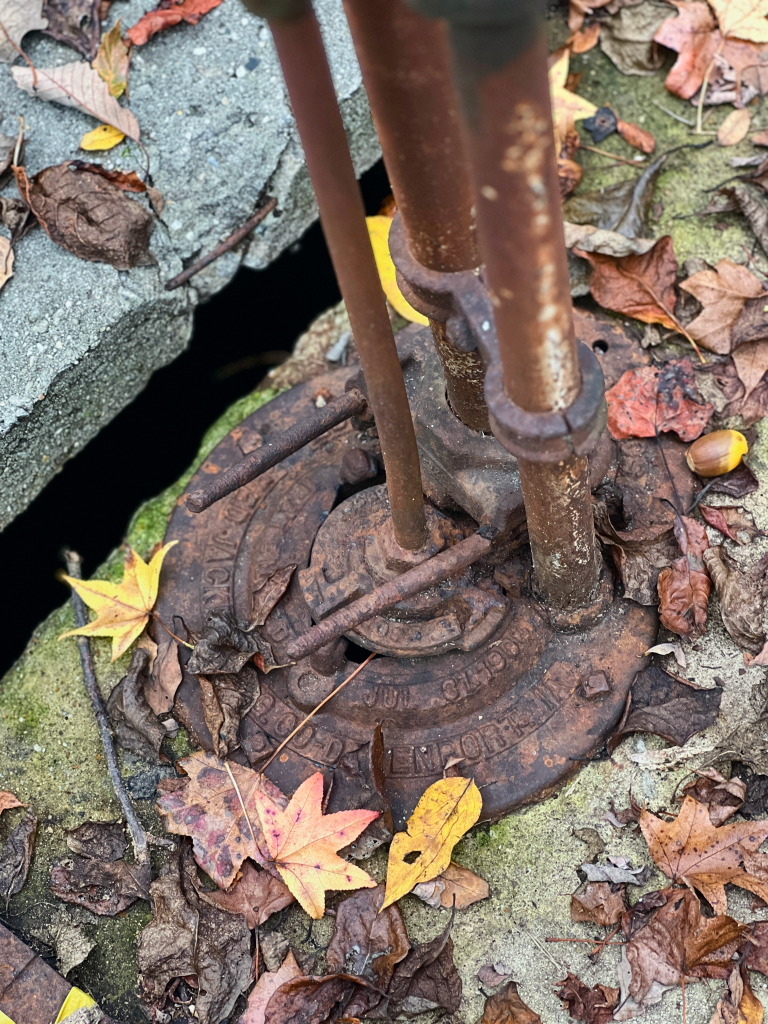
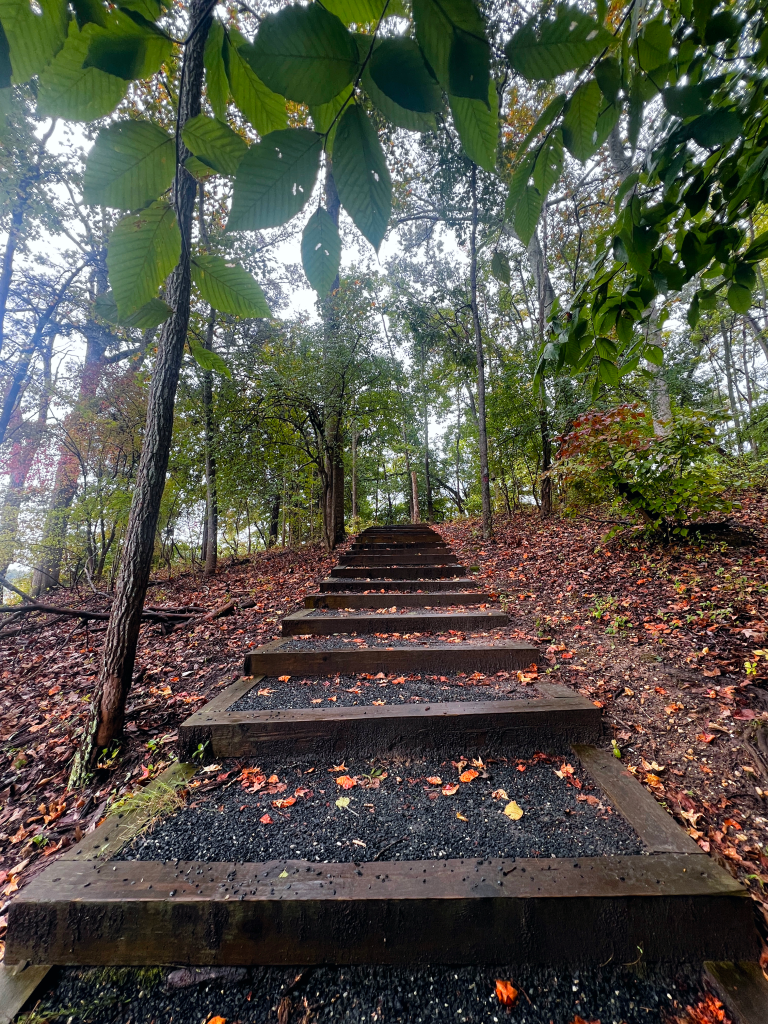
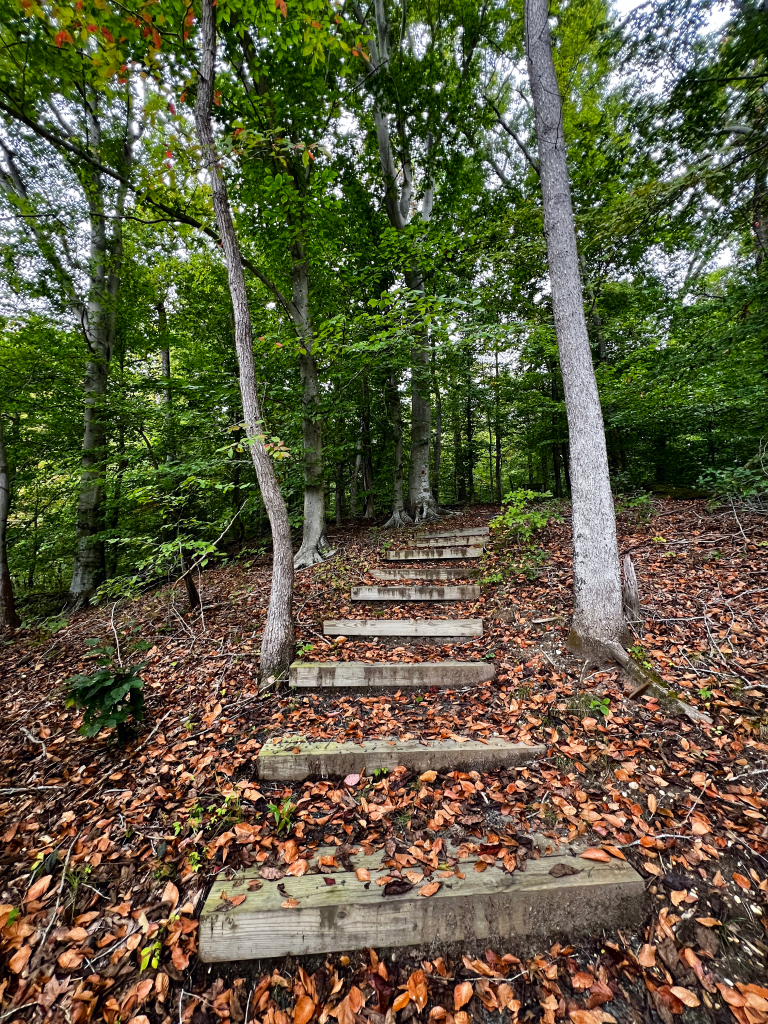
If you wander SERC’s trails today, you can still see the brick ruins of the Java plantation mansion.. The mansion, once the centerpiece of a sprawling tobacco plantation, was struck by lightning in 1890 and burned to the ground, leaving only fragments behind. Those bricks, now soft with age and moss, are more than remnants of a building—they’re physical witnesses to the complex and often painful history of this land. The plantation was built and sustained through the forced labor of enslaved people, whose lives and contributions are slowly being unearthed and honored through archaeology and historical research. SERC intentionally preserves this site not just as a historical landmark, but as a reminder that land carries stories—and that conservation must hold both environmental and human truths to be complete.
What SERC Studies (and Why It Matters)
SERC scientists focus on land-to-sea connections: nutrient pollution and water quality, blue crab movement and fisheries, marsh migrations under sea-level rise, invasive species, carbon storage in coastal forests, and more. Long-term research here feeds local, state, and national decision-making across the Chesapeake and beyond.
One of the most impactful ways SERC’s work has shaped the world beyond its shoreline is through research that drives real policy change. For example, their long-term studies on ballast water and invasive species directly informed national and international regulations. SERC scientists documented how ships were introducing non-native organisms—like zebra mussels and other hitchhiking species—into U.S. coastal waters, threatening ecosystems and economies. Their data helped shape the U.S. National Invasive Species Act and contributed to ballast water management rules adopted by the International Maritime Organization, creating stricter standards for how ships discharge water. Another powerful example is their nutrient pollution research in the Chesapeake Bay, which provided the scientific backbone for parts of the Chesapeake Bay Total Maximum Daily Load (TMDL)—essentially the “pollution diet” that guides EPA and state-level water quality regulations. In both cases, SERC’s blend of field science, long-term monitoring, and collaboration with policymakers turned quiet shoreline observations into protections felt across entire regions.
The Building That Teaches
Returning to the Mathias Lab after our shoreline hike ties everything together in a way that’s both tangible and deeply inspiring. The Charles McC. Mathias Laboratory isn’t just where SERC scientists conduct cutting-edge research—it is a living example of the environmental principles they teach. The LEED-Platinum-certified building uses geothermal wells, rainwater harvesting, stormwater treatment wetlands, and natural lighting systems to minimize its footprint and operate in harmony with the landscape. Even the surrounding grounds are part of the design: native plants filter runoff, green roofs help regulate temperature, and the orientation of the building itself reduces energy demand. Inside, researchers work on climate change, coastal resilience, and ecosystem health—essentially, solving the very problems young people are inheriting.
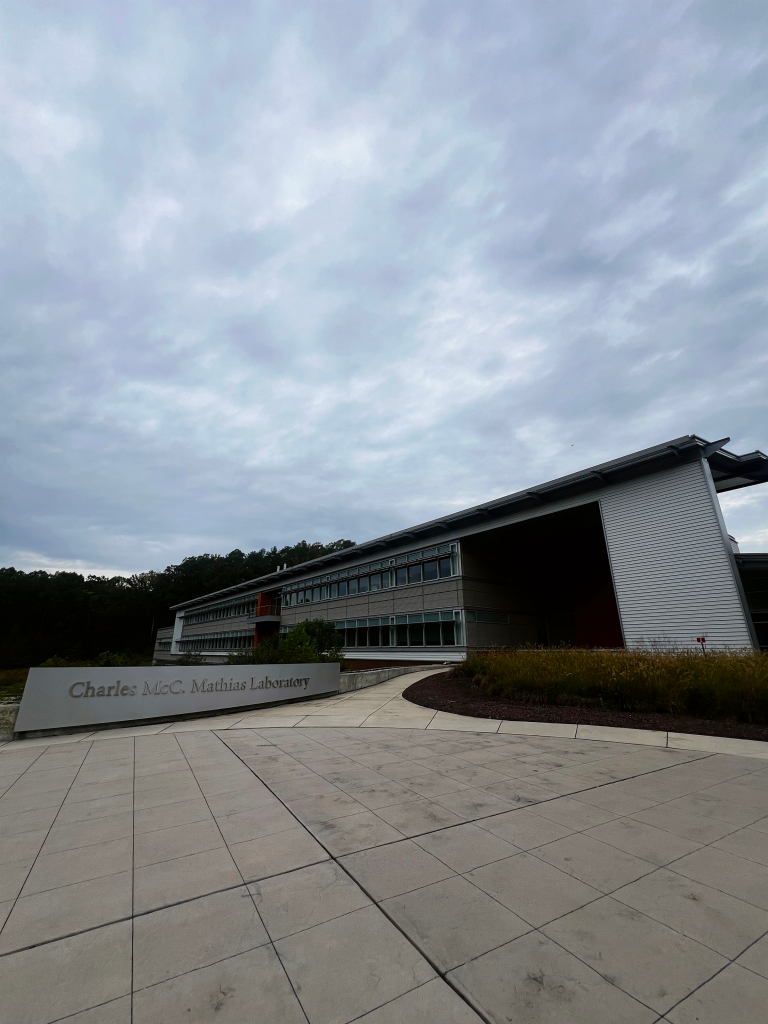
For the next generation, the Mathias Lab stands as more than just a building. It’s a blueprint for hope. In an age where climate anxiety is common, seeing a structure that proves we can live and work differently matters. It shows that sustainability isn’t some abstract concept; it’s a choice we can make at every scale—from a single building to entire communities. When young hikers walk out of the marsh and into a lab that runs on renewable energy and smart design, the narrative shifts from “What’s broken?” to “What can we build?” It gives them a vision of a future they can help create—one that reflects their values of stewardship, innovation, and collective responsibility.
Participatory (Citizen) Science: Join the Work
One of SERC’s greatest strengths is how it opens science to the public—not just as spectators, but as true collaborators. For years, this was called “citizen science”—a phrase that often implied volunteers were helping scientists with their work. But language matters. SERC and many other institutions have shifted toward calling it “participatory science” to better reflect the deeper, more reciprocal role volunteers play today. It’s not just about collecting data anymore—it’s about shaping questions, sharing lived experience, and connecting science to community priorities. This change in terminology makes the work more inclusive, more accurate, and more powerful.
At SERC, volunteers help collect water-quality data through Chesapeake Water Watch, band migrating owls through Project Owlnet, and even unearth history with the Environmental Archaeology Lab—just a few of the dozens of projects where public participation drives real research. But the opportunity doesn’t end at the campus gate. Many projects offer virtual data analysis, remote water-quality monitoring partnerships, and distributed observation programs that anyone can join, no matter where they live. This means Girls Who Hike Virginia participants—and anyone else who wants to take part—can contribute to ongoing research even from their own local trails and waterways.
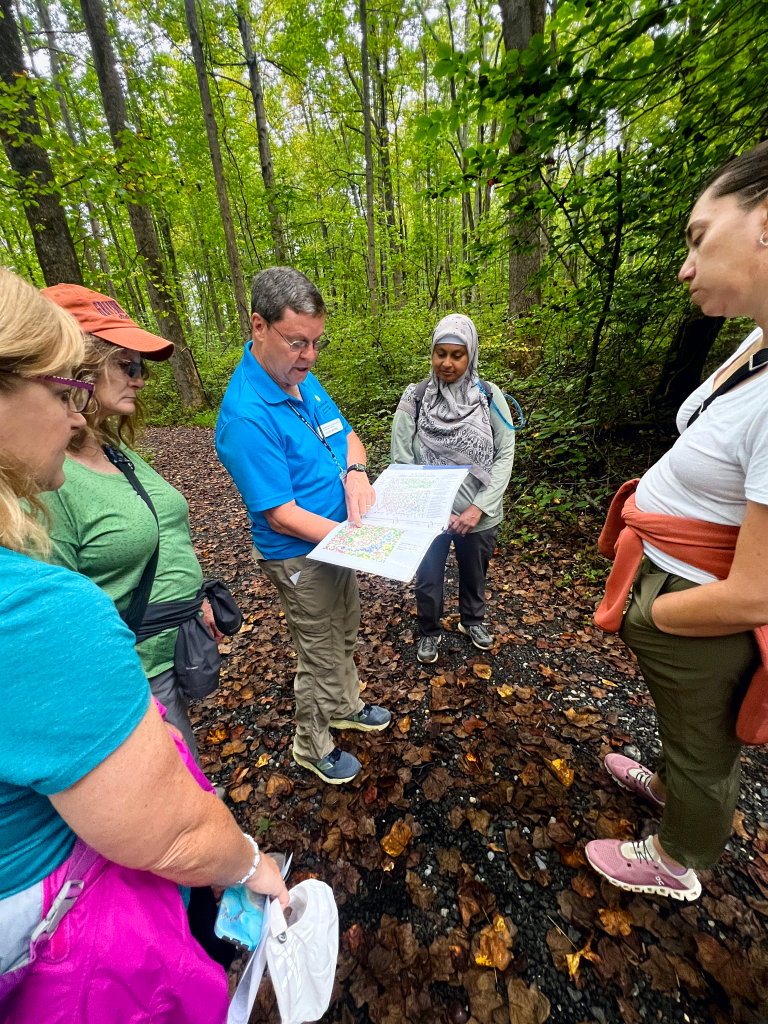
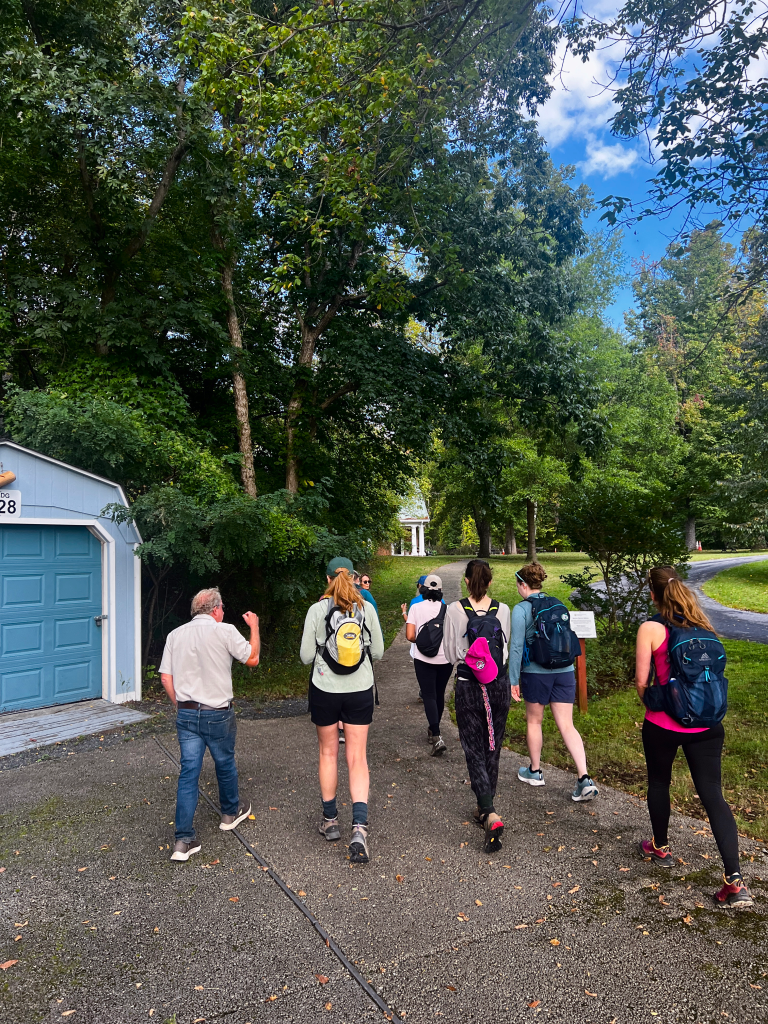
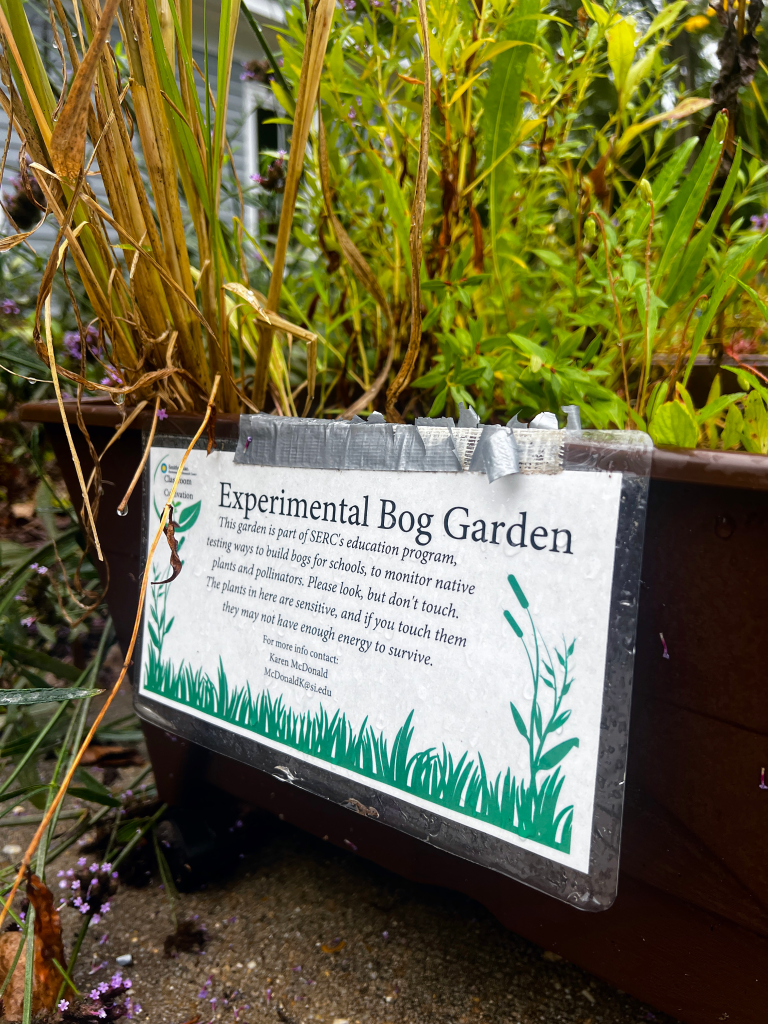
For Girls Who Hike Virginia, that invitation landed in a very real way. It’s one thing to learn about estuaries. It’s another to kneel at the shoreline with a secchi disk in hand, log a shoreline transect, or sift through soil outside Woodlawn and uncover a ceramic shard that rewrites a piece of local history. These small, hands-on actions ripple outward, connecting people to science and policy in a way that feels both personal and purposeful. Participatory science is more than data collection—it’s a way to belong to the work of protecting and understanding the world around us.
Why These Two Routes Belong Together
-
Shoreline first, then lab: You feel the place before you measure it. The water, the wind, the living edge. Then the instruments and datasets give you the language to describe what your senses already knew.
-
Lab first, then shoreline: You learn the “why” of experimental design and sustainability at a building scale, and then you step outside to see how those ideas play out in a marsh, a forest edge, a cove.
-
Always end at Woodlawn: Because no conversation about land is complete without people—the First Peoples, the enslaved and free families, the tenant farmers, the scientists and volunteers—each leaving a footprint that we can choose to understand and, where possible, to heal.
Planning Your Own Visit
SERC is open daily with trails, the Woodlawn History Center, and rotating tours and programs. If you can, try both experiences: a shoreline hike from the Education Center and a behind-the-scenes look at the Mathias Lab. Then leave time for Woodlawn—because history and science truly come alive when experienced side by side.
For those who want a little more adventure, SERC also allows visitors to kayak or canoe along the Rhode River, offering an entirely different way to experience the estuary and its living ecosystems. Paddling past spartina marshes, oyster reefs, and the edges of old farmland gives a sense of how this land and water have always been connected.
And if you’re planning a group outing, the process is surprisingly simple. If you give SERC enough time to plan, arranging a guided tour or educational program is smooth and easy on your end. Their staff and volunteers handle the logistics, so you can focus on gathering your group, setting expectations, and enjoying the day. Whether you’re leading an organization like Girls Who Hike Virginia or bringing friends for a meaningful adventure, it’s a visit that blends nature, history, and hands-on learning in a way few places can match. Bring a notebook—and maybe a paddle—because you’ll want to remember what you notice.
Further Reading & Sources
-
SERC history timeline and origins. Smithsonian Environmental Center
-
Name changes and evolution of the center. Chesapeake Bay Forum
-
Contee Farm acquisition and reunited landscape. Smithsonian Environmental Center
-
Woodlawn House construction date, residents, exhibits, and archaeology. Smithsonian Environmental Center
-
Java plantation ruins and site summary. Chesapeake Inspired
-
Mathias Lab sustainability and LEED Platinum. Smithsonian Environmental Center
-
SERC’s definition of participatory science and current volunteer projects. Smithsonian Environmental Center
-
SERC land acknowledgment exhibit (context for ancestral homelands). Smithsonian Environmental Center
