If you’ve ever signed up for something outdoors while quietly thinking, “This might be a mistake…” — welcome in!
My your hiking company Book Club is free, open to everyone, and built for real life. We meet for just 40 minutes on Zoom — long enough for meaningful conversation, short enough to respect your time. You don’t need to finish the book. You don’t need to love the book. You just need curiosity.
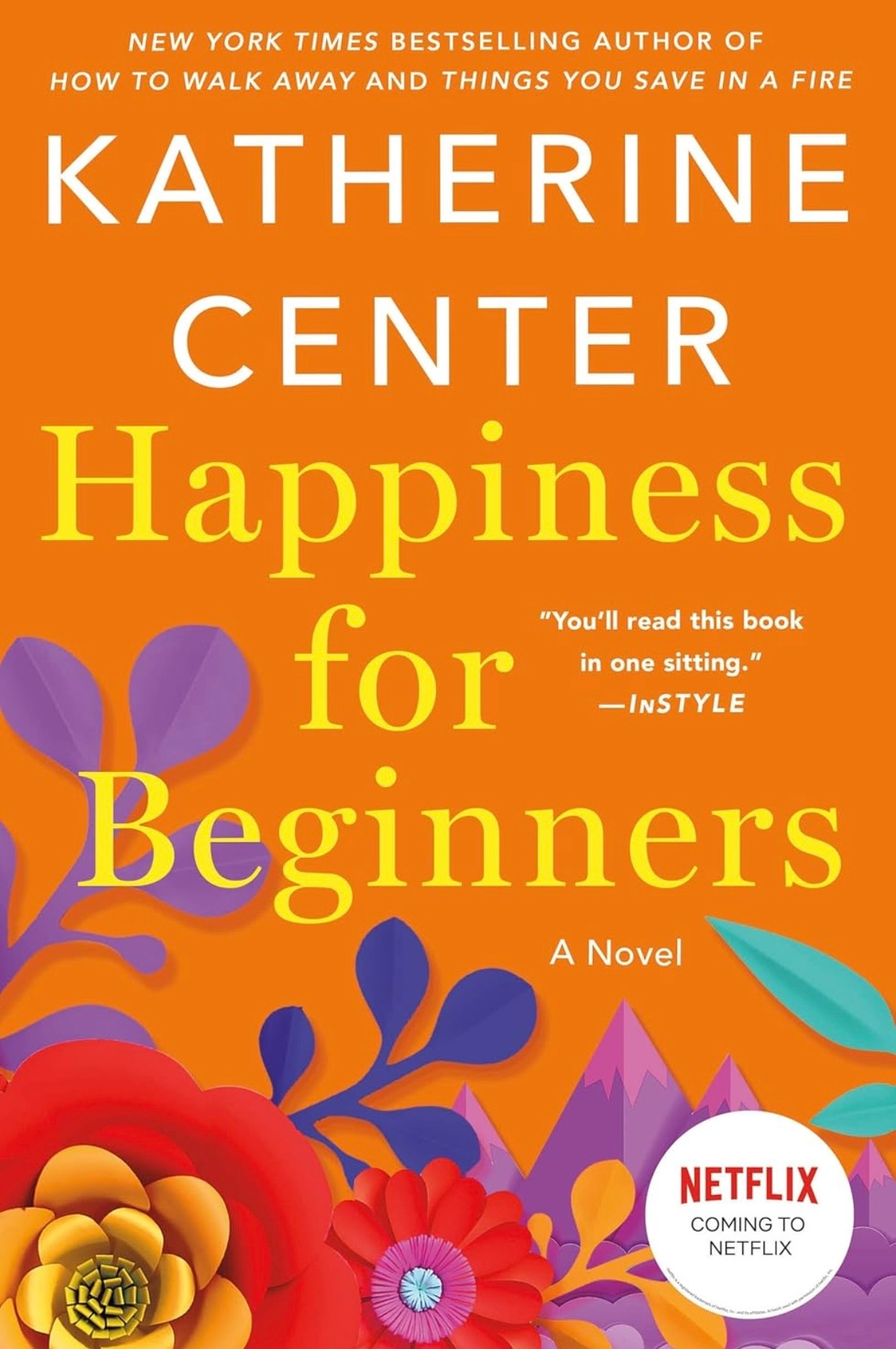
For Happiness for Beginners by Katherine Center, I approached the story through an outdoor lens, not literary perfection, not romance tropes, but wilderness experience.
Because this book isn’t about becoming “outdoorsy.”
It’s about what happens when the outdoors removes the noise and forces you to meet yourself exactly where you are.
Book Context
Helen Carpenter doesn’t head into the wilderness to “find herself.”
She signs up for a brutal Wyoming survival course because her internal life has collapsed — divorce, identity loss, emotional drift. She needs rules. Structure. Forward motion.
What she gets instead is exposure. Discomfort. Repetition. Consequence.
I created a short NotebookLM video summary to anchor us in the story, and then we will dug into what felt real.
Post-video questions:
- What felt familiar to you as someone who spends time outside?
- What felt unrealistic…or even uncomfortably accurate?
The Wilderness Course as the Real Teacher
The course isn’t therapy.
It doesn’t coddle.
It doesn’t explain.
It removes:
- Comfort
- Distraction
- Control
- Identity markers
And that removal creates clarity.
- Why does the wilderness force change in ways daily life doesn’t?
- When has discomfort been clarifying rather than harmful in your own outdoor life?
- What’s the difference between chosen hardship and chaos?
For those of us who guide, hike, lead trips, or train for endurance events, this part rings loud. Outdoor education works because it strips away noise. What’s left is behavior. Choice. Response.
Type-2 fun has a purpose.
Readiness vs. Showing Up
Helen doesn’t believe she’ll succeed.
She just believes she needs movement.
Stop here and think about how often confidence comes after the first miserable days — not before.
Questions to explore:
- Have you ever signed up for something outdoors knowing you weren’t ready?
- What does this book suggest about waiting to feel brave before acting?
- Is fear always a stop sign?
Fear doesn’t always mean “don’t go.”
Sometimes it means “go carefully and pay attention.”
Group Dynamics Under Stress
The wilderness accelerates truth.
Age differences, ego, insecurity, leadership instincts — all of it surfaces faster when you’re tired, wet, and unsure.
Unpack:
- How shared hardship flattens social differences.
- What quiet leadership looks like.
- How judgment dissolves (or sharpens) under stress.
Optional leadership angle:
Helen doesn’t try to become a leader.
She becomes competent.
And competence invites trust.
That’s real backcountry energy.
Strength Beyond Bravery
Helen thinks she’s there to learn bravery.
What she actually builds:
- Endurance
- Adaptability
- Self-trust
- Decision-making under stress
Outdoor competence isn’t loud.
It’s mile-by-mile earned.
Which of those resonates most with your own growth outside?
Gear, Limits & the One-Book Rule
Participants are allowed one book on the course.
That constraint opens a rich conversation:
- Would you bring comfort?
- Identity?
- Humor?
- Knowledge?
When weight matters, you choose carefully.
Just like in life.
Book vs. Movie
Before we even get into the wilderness differences, I should say this:
This is not the kind of book I normally choose.
I genuinely do not remember how it landed on my reading list or who suggested it. Contemporary romance-adjacent fiction is not typically my lane. Shocking, I am sure. And while I’m not suddenly pivoting my entire bookshelf in this direction, I’m also not mad I read it.
Why?
Because approaching it through an outdoor education lens, and building this reflection around it, allowed me to extract something meaningful. The wilderness framework made it richer than it might have been otherwise.
The movie, however?
Garbage. To me.
And not because it was romantic or light — but because it flattened the wilderness.
The biggest difference isn’t the love story.
It’s the intensity of the outdoors.
The film softens:
- Remoteness
- Risk
- Discomfort
- Earned transformation
It trades tarp-level grit for cinematic ease. Growth feels implied instead of endured.
I ask you:
- Which version felt more true to real outdoor transformation?
- Why do films often soften wilderness hardship?
- What do we lose when we remove risk and uncertainty?
When you take away the real consequences of the backcountry, you dilute the lesson.
And that’s where the book, imperfect and not-my-usual, still wins.
I Close With This
How has the outdoors taught you something you couldn’t learn anywhere else?
Where in your life might “trying anyway” be the brave move?
What does starting over look like — practically, not dramatically?
And then this reminder: Happiness isn’t a summit.
It’s a skill.
And like any outdoor skill, it’s learned through practice, mistakes, and showing up again.
As I write this closing, I’m thinking about being on a mountain just the other day.
I was teaching one of my students how to ski. Over the school year, we’ve grown close while walking mile after mile through mid-Atlantic forests together. She’s brilliant. Strong. Thoughtful. Naturally athletic. Talented. And a raging perfectionist.
It was her first time skiing.
If you resonate with any of those traits and have ever tried something new without immediately excelling, you might understand the despair that set in as she fell again and again on a mountain straddling Virginia and West Virginia. In her mind, everyone around her was an Olympic athlete. (In reality, we were on the learning hill, and she was doing just as well as most.)
At one point, she snapped off her skis and started walking down the slope in ski boots because she’d decided she would rather hike than keep trying.
I have a photo of it. It’s equal parts funny and heartbreaking.
I pulled out my full voice.
I told her I saw her. That I knew she was spiraling because she was stuck in her head, trying to perfect something brand new. I reminded her that needing practice doesn’t mean you’re bad at something, and it certainly doesn’t mean you’re just plain bad.
We stood there and took a few slow breaths together. I told her that if she was truly done, that was okay. Quitting thoughtfully is different than quitting from despair. I just wanted her to decide from a grounded place.
We took a break.
And then?
She chose to try again — but this time, she chose to make it fun.
She laughed. She fell. She got up. She had a blast.
She could have made any decision and it would have been valid. I would have supported her either way. But she wanted to feel better. She wanted to enjoy it. And so she took the small, unglamorous steps required to get there.
Happiness isn’t a personality trait.
It’s a skill.
Join the Next Free Book Club Session
A few times a year we read stories about growth through experience, not perfection.
You’ll receive:
- A discussion guide ahead of time
- The Zoom link
- Optional companion materials
It’s thoughtful. Low-pressure. Outdoor-minded.
If you’ve ever grown because you got uncomfortable outside — you’ll fit right in.
The next session: Spirit Run on April 29th, 2026
Register here: Eventbrite