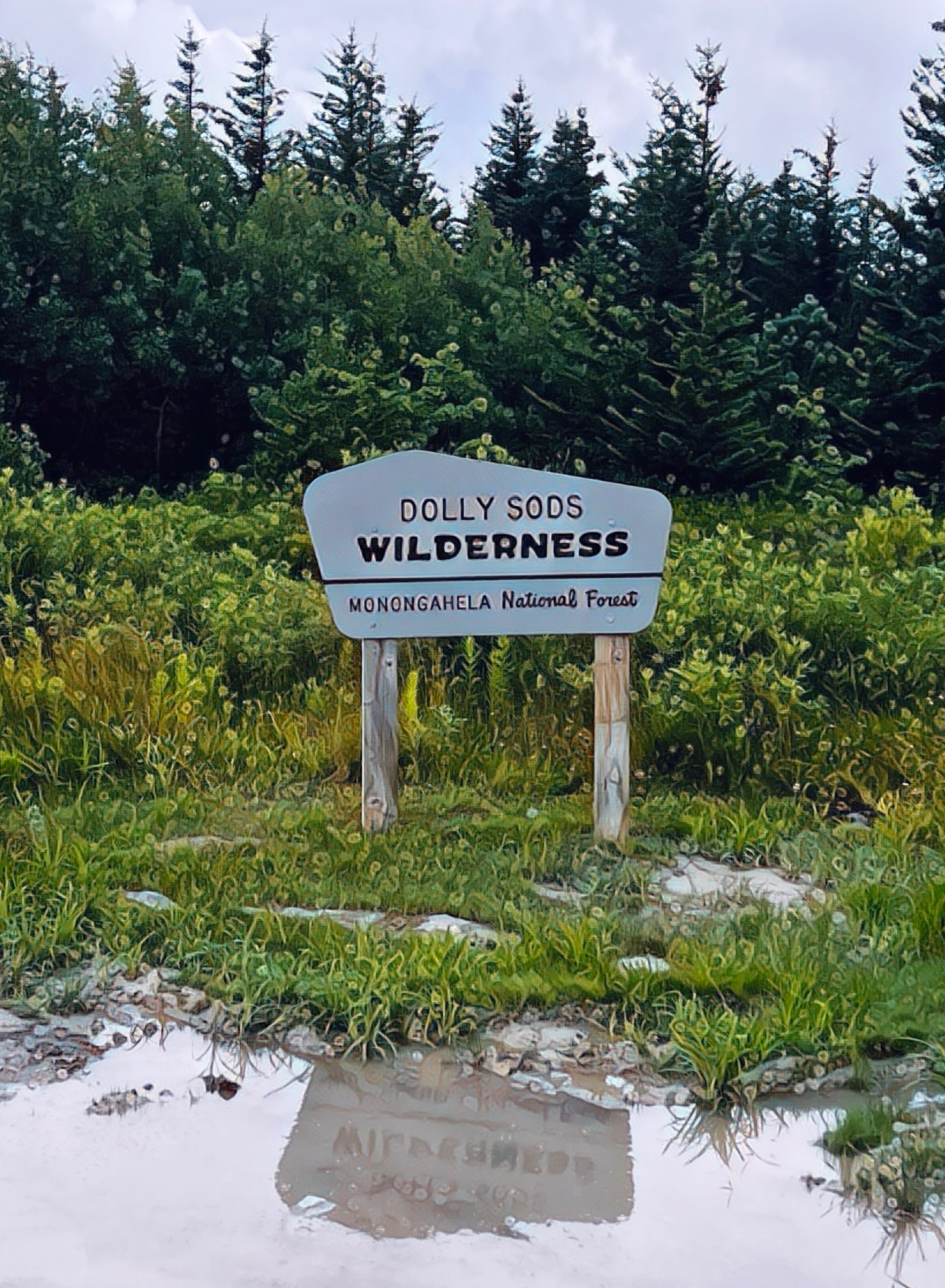
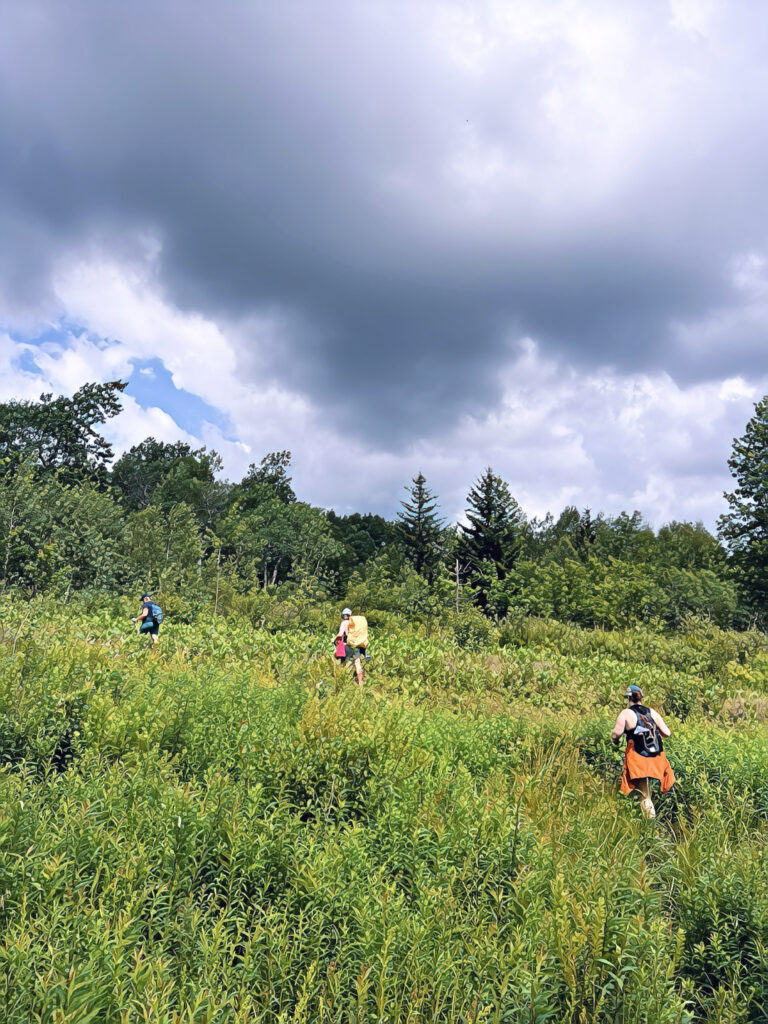
There’s no better way to celebrate another trip around the sun than with wilderness trails, laughter in the rain, and stars above your tent. This year, three trail buddies and I headed into the heart of West Virginia for a weekend birthday backpacking adventure across some of the most stunning highlands in the eastern U.S.—Spruce Knob, Seneca Rocks, Bear Creek, and Dolly Sods Wilderness.
Day 1: Spruce Knob – Touching the Sky
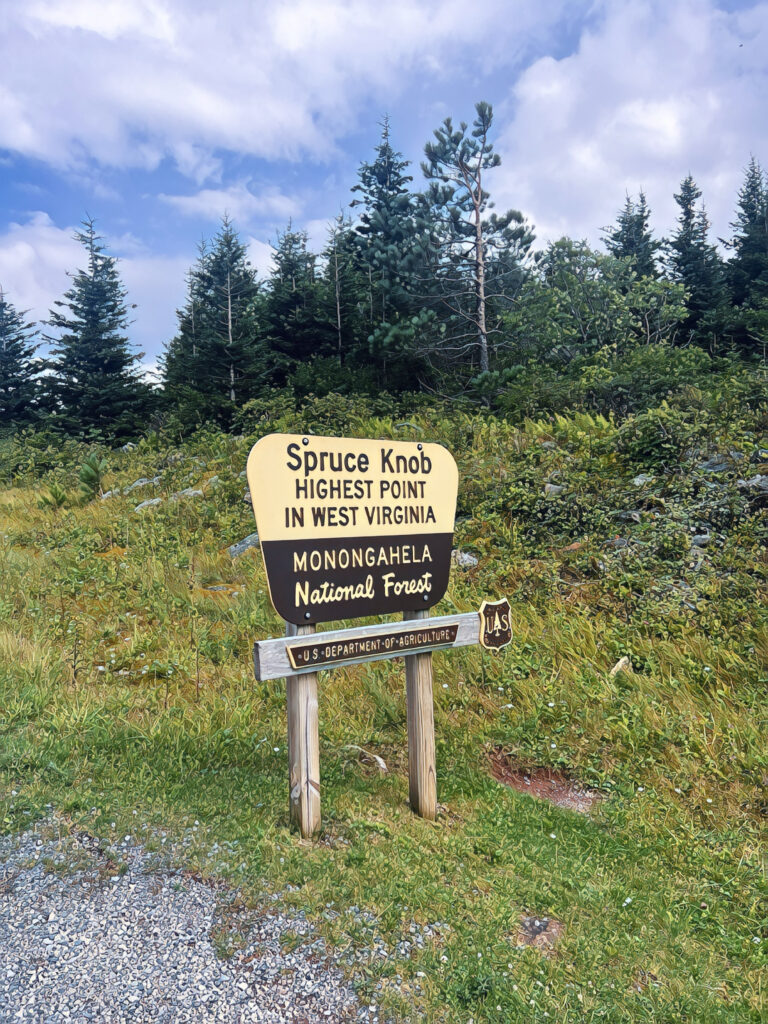
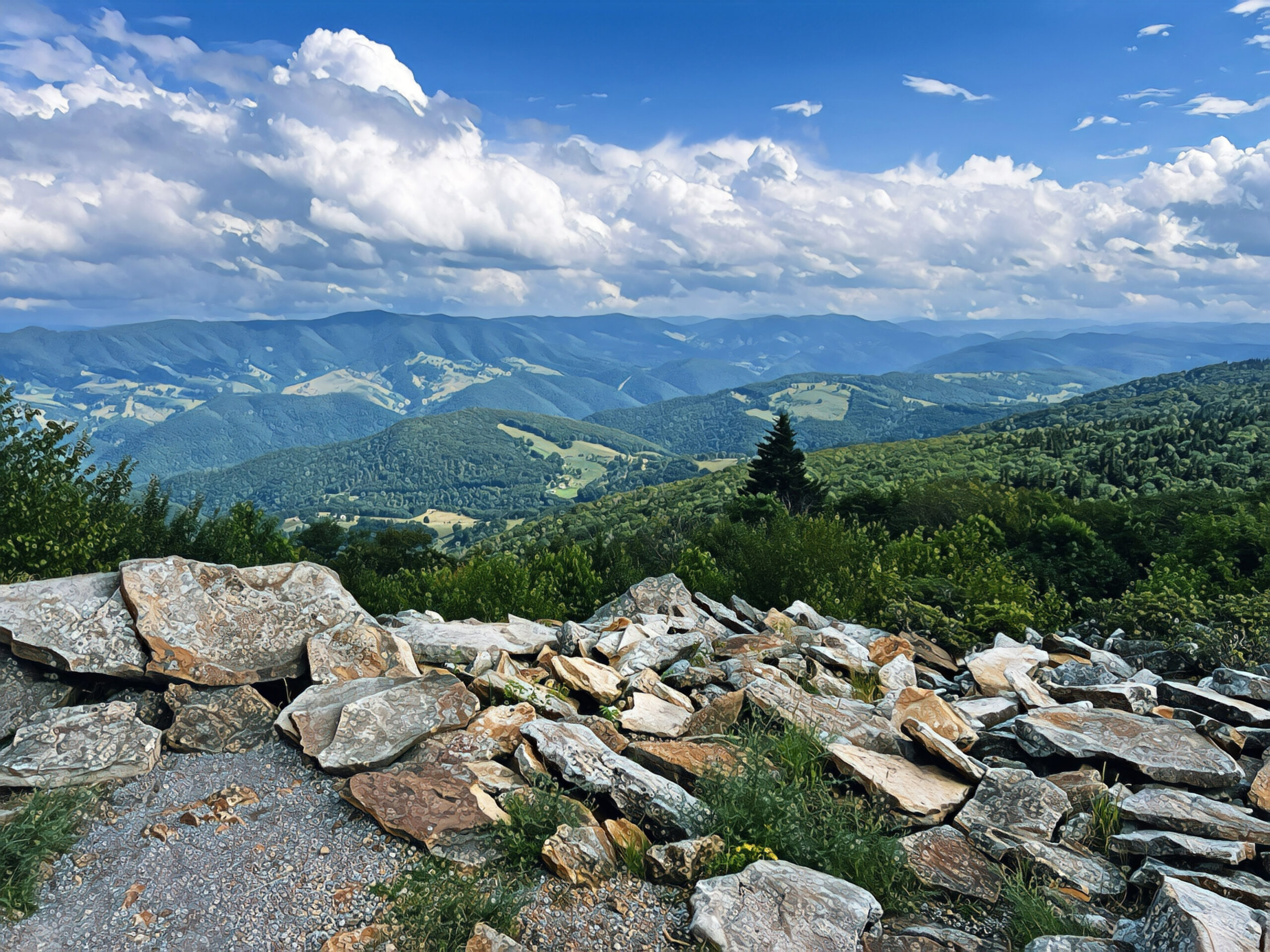
We kicked things off at Spruce Knob, the highest point in West Virginia at 4,863 feet. The summit is crowned with spruce trees, alpine-like meadows, and a stone observation tower offering sweeping views of rolling ridgelines and deep valleys.
Long before it became a favorite for hikers and stargazers, the area was part of the ancestral lands of the Monongahela people and later traversed by members of the Shawnee and other Woodland tribes. These peaks were part of traditional hunting routes and spiritual landscapes long before European settlers arrived. Spruce Knob’s unique alpine ecosystem—featuring wind-stunted red spruce and rocky outcrops—is a rare environment south of New England, shaped by the last Ice Age and sustained by its elevation.
Night 1: Camping at Seneca Rocks
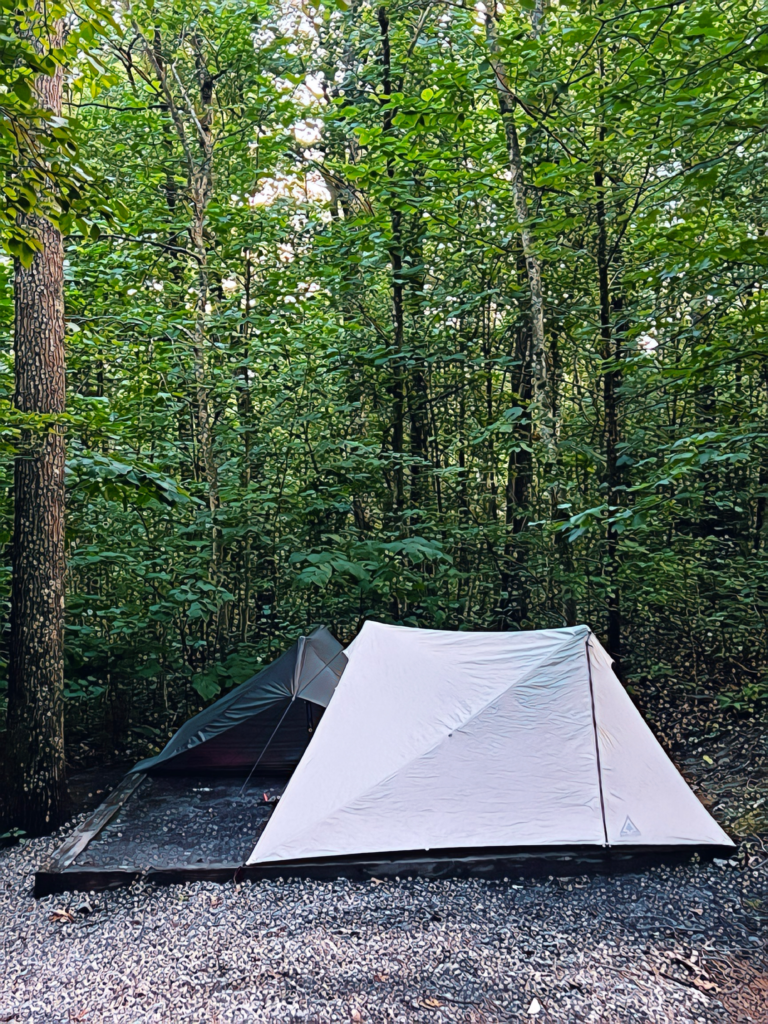
From Spruce Knob, we made our way down to camp at Seneca Rocks, one of the most iconic natural landmarks in West Virginia. These sheer quartzite fins shoot up from the valley floor like the spine of a buried giant. We set up camp nearby and had a restless night through a rainstorm.
Seneca Rocks has its own impressive human and geologic story. Geologically, they’re remnants of ancient sea beds folded and lifted over 250 million years ago. Historically, the rocks were used as a training ground for U.S. soldiers during World War II—specifically the 10th Mountain Division, who practiced rock climbing here before heading to combat in the Alps.
The name “Seneca” comes from a misattribution to the Seneca people of New York, but the land was more directly used and traversed by the Shawnee, Tuscarora, and other Algonquian-speaking tribes. The jagged cliffs held both strategic and sacred importance, and their imposing beauty continues to inspire awe.
Day 2: Bear Creek Bouldering
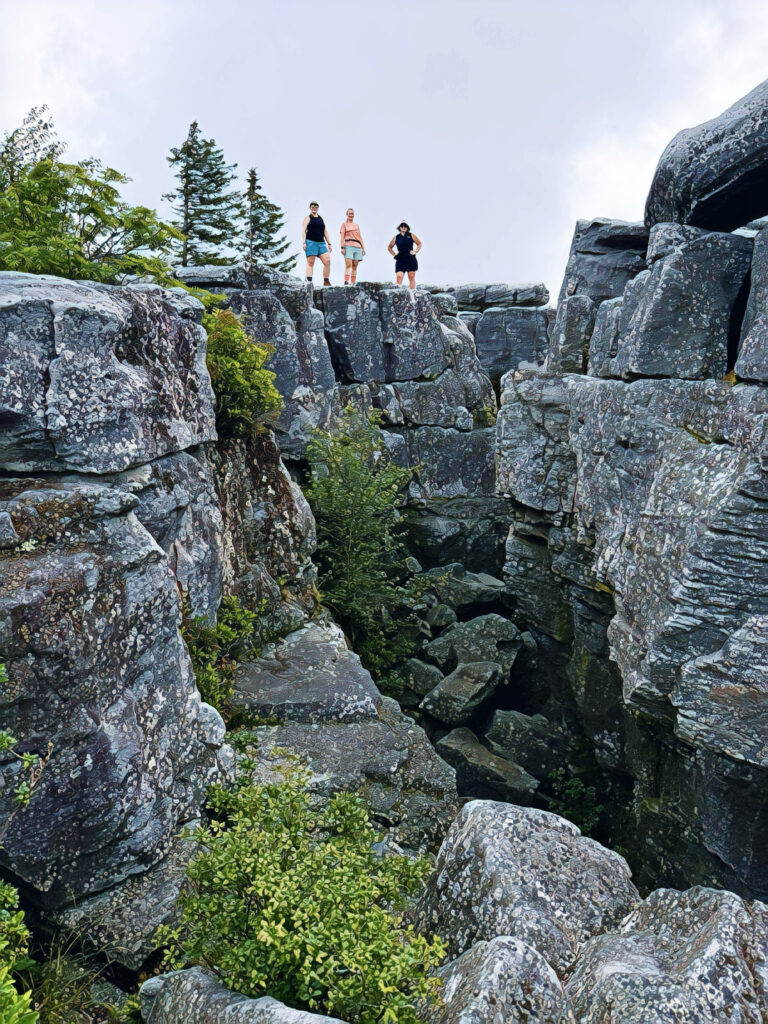
The next morning, we fueled up with junk food and caffeine at a local convenience store and clambered around the Bear Creek area, near Smoke Hole Canyon. While it’s a lesser-known spot, it’s a dream for adventurous spirits—scrambling over giant mossy boulders and leaping across the enormous rocks. This spot gave us an exciting introduction to how we would spend the next 24 hours in Dolly Sods.
The rocks in this area are part of the Tuscarora Sandstone formation, tough and timeworn from eons of water and wind carving. You can see the ancient power of the Potomac River’s ancestors written into the land here.
Night 2: Backpacking into Dolly Sods
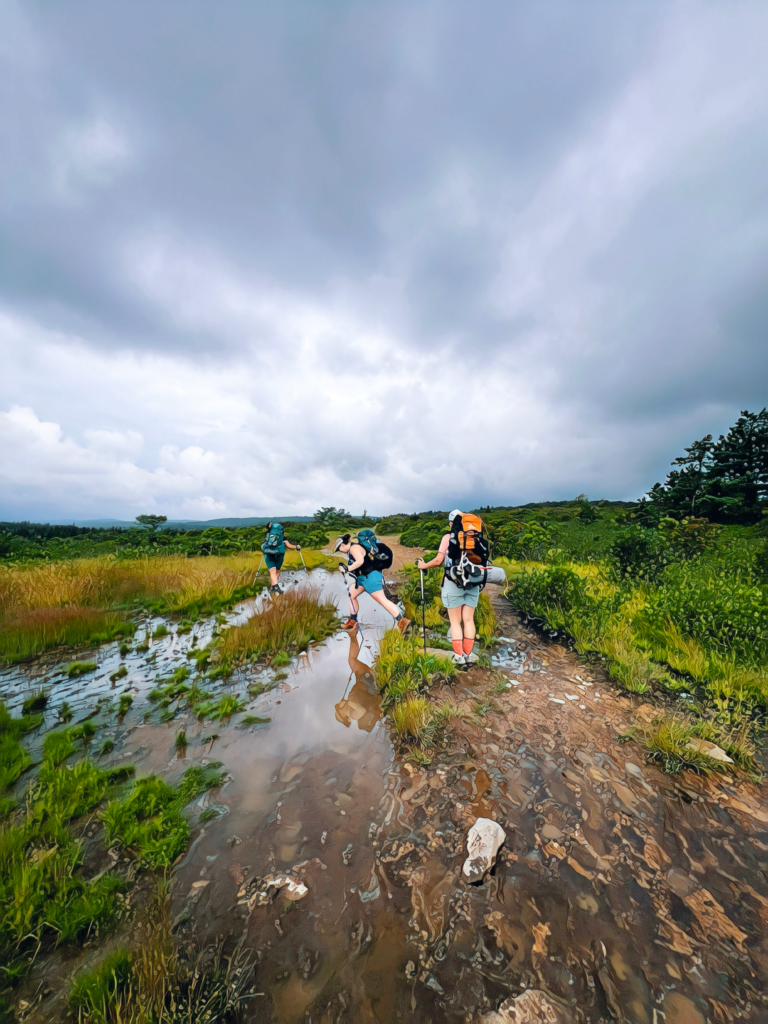
For the final stretch of the trip, we threw on our full packs and entered the surreal world of the Dolly Sods Wilderness. Nestled in the Monongahela National Forest, this high-elevation plateau feels unlike anywhere else in the Mid-Atlantic. Open meadows, wind-shaped red spruce, stunted trees, sphagnum bogs, and sudden rock outcrops give it an almost tundra-like vibe—many say it resembles parts of southern Canada. It reminded me of parts of Montana where I have backpacked.
The Dolly Sods were heavily logged and burned in the early 1900s, and later used as a WWII artillery and mortar training ground—live ordnance is still occasionally discovered today. But the land has rebounded in incredible ways. It’s now protected as a federal wilderness, and walking here is like stepping into a place that’s slowly healing.
We hiked in under a moody sky, found a mossy campsite overlooking a stream, and lasted only until “backpacker’s midnight” listening to Tasha’s stories and playing word games, hoping a woodland creature would cross the creek in front of us. The only wildlife who visited us was one mouse who decided to eat through Jenn’s tent and then torment her while even more rain poured on us through the night.
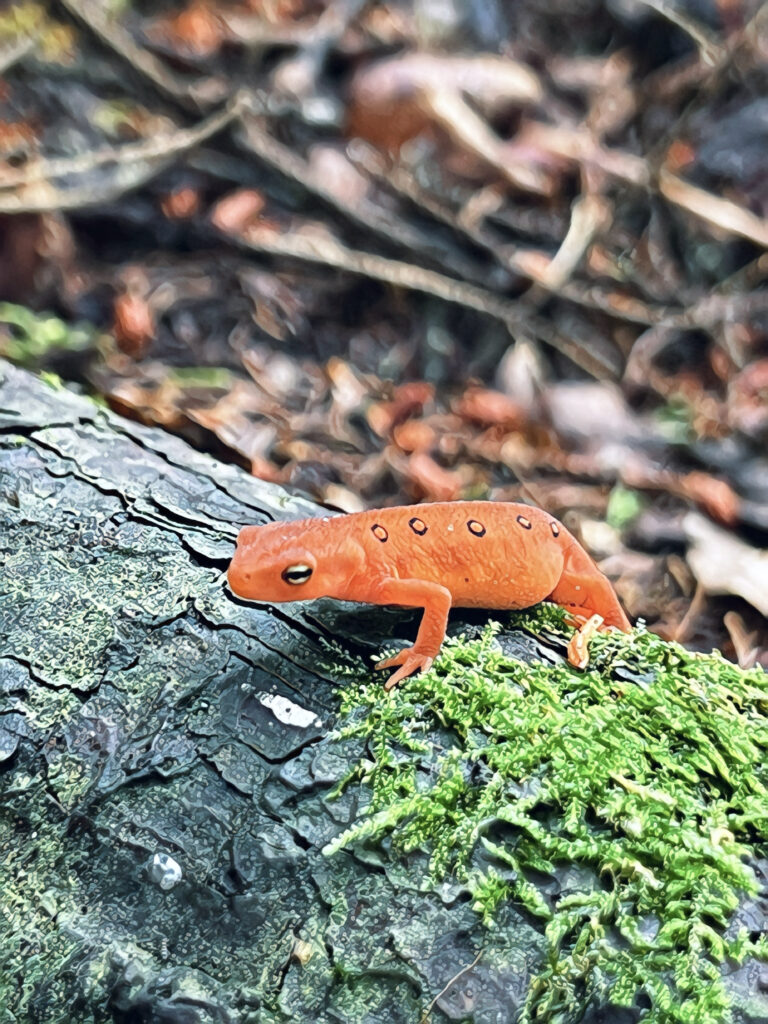
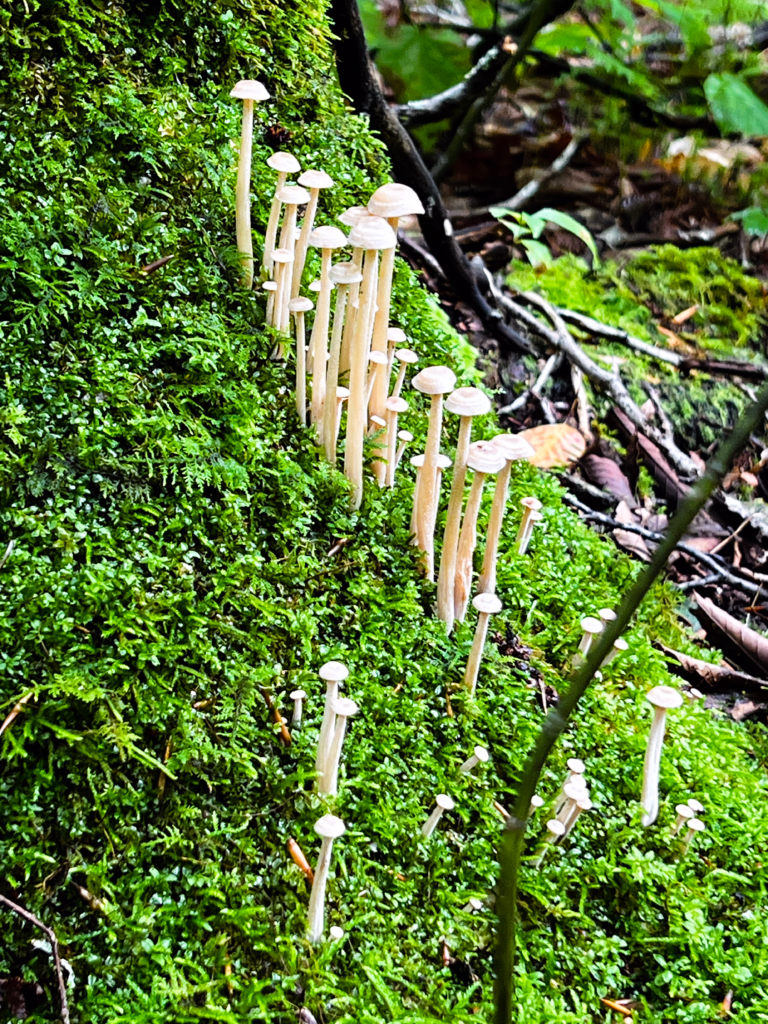
One of the unexpected joys of backpacking through this region was discovering the hidden world of mushrooms and salamanders. Because it rains so much here, the forest floor was covered with colorful fungi: bright orange chanterelles, purple cortinarius, delicate coral fungi, and ghostly white mushrooms glowing under the ferns. Beneath logs and along the edges of bogs we spotted bright red salamanders quietly thriving in the moist, undisturbed understory. This area is part of the central Appalachian biodiversity hotspot, and its cool, shaded ecosystems—especially at high elevations—make it a haven for these sensitive, ancient species that have survived here for millions of years. Wandering among them, you get the feeling that magic really does live just below the surface.
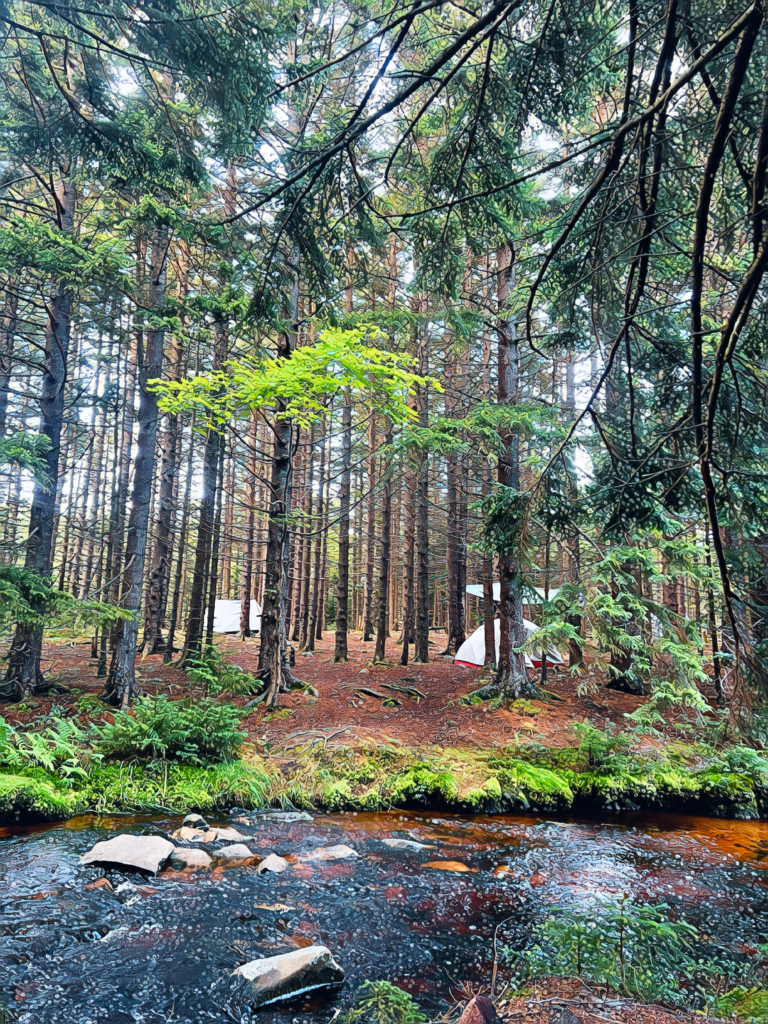
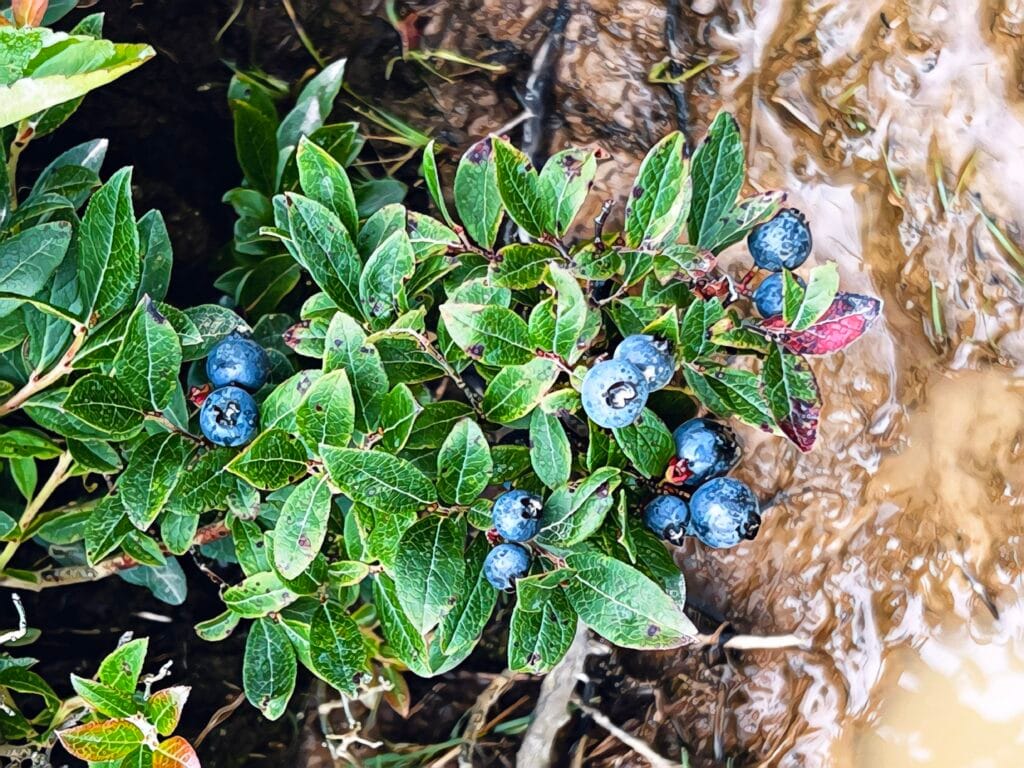
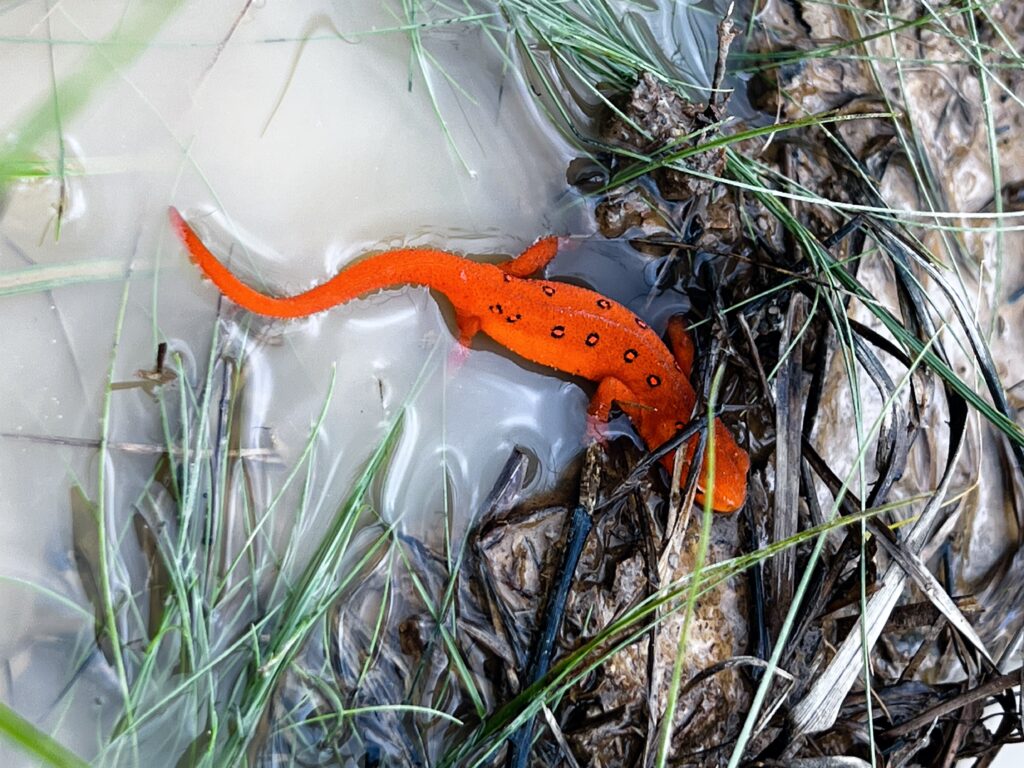
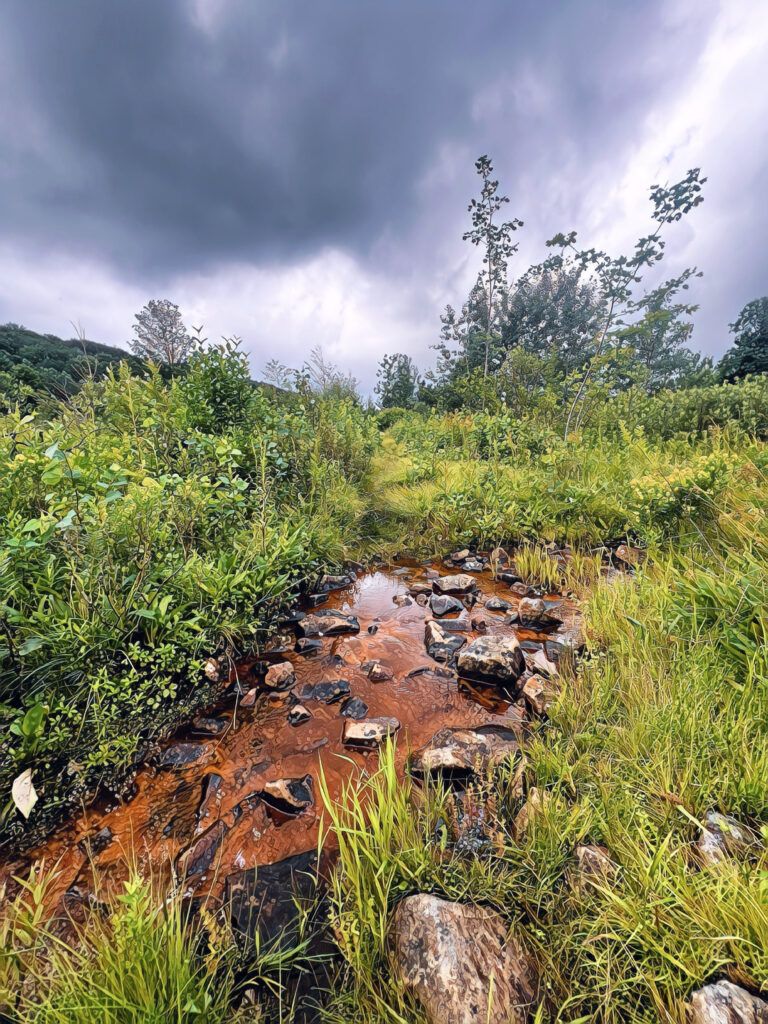
The water in Dolly Sods and the surrounding highlands has a distinct, almost otherworldly quality—often tinted with a reddish or tea-like color. This comes from the tannin-rich bogs and sphagnum moss that dominate the plateau’s unique subalpine ecosystem. As rainwater seeps through the acidic soil and decomposing plant matter, it picks up natural compounds that stain the streams and creeks a deep amber hue. It’s perfectly safe to drink when filtered, but it tastes different—earthy and soft, like the land itself. This hydrology is part of what makes Dolly Sods so ecologically rare; it’s more like a northern peat bog than anything typically found this far south, and its delicate wetland systems support an incredible range of plant and animal life found almost nowhere else in the region.
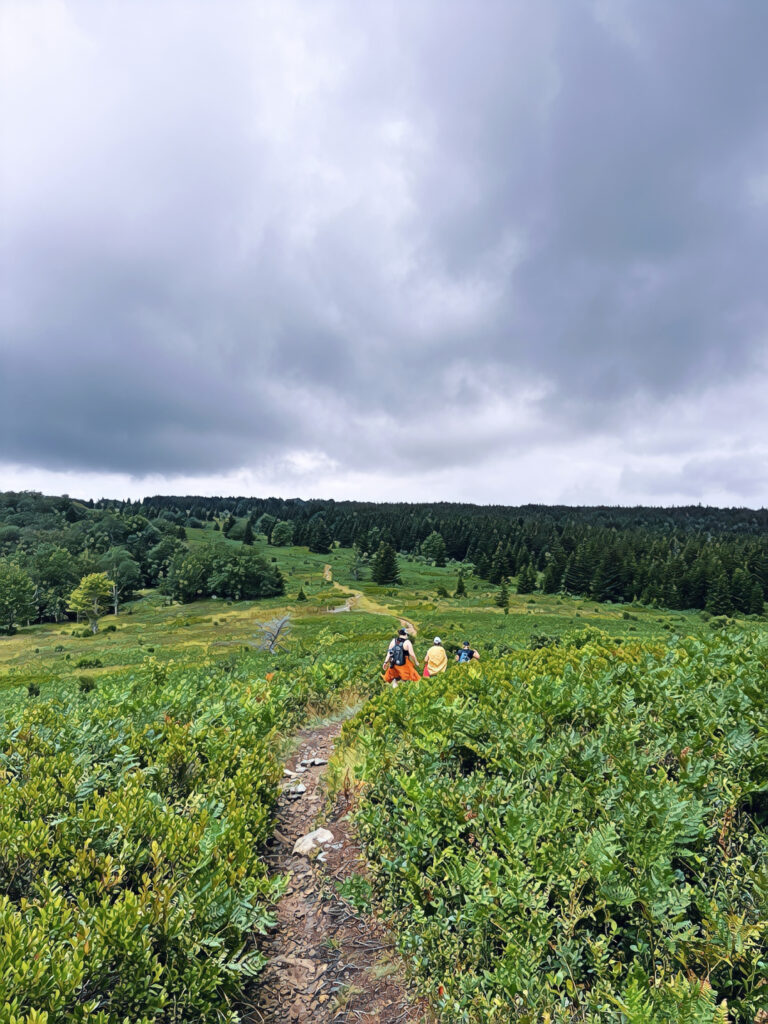
This land also holds deep indigenous roots. The Seneca Trail, part of a network of indigenous paths stretching through the Appalachians, ran near these highlands. The meadows and open lands were used seasonally for hunting, and the original stewards of this land—long erased from maps but never from its spirit—moved through these hills long before the wilderness designation.
A Birthday for the Books
Backpacking these ancient landscapes—where every stone has a story and every trail bends through layers of time—felt like the best birthday gift I could give myself. There was dirt under my nails, peace in my bones, and gratitude for the three friends who walked each step beside me.
If you’re looking for a birthday that’s equal parts wild and wonder-filled, I can’t recommend this route enough. Just don’t forget your bear bag or vault, a water filter, and your sense of reverence—because out here, you’re walking through more than just scenery. You’re walking through memory, both human and geologic.
